Claude Designed Protein Binders Against Scorpion Venom Toxins: 318,484 Designs, 211 Lab Tests, 17 Hits
On October 20, 2026, Anthropic reported that a Claude research model ran a largely autonomous protein design campaign against five scorpion neurotoxins. It generated 318,484 designs in 64 hours, two labs tested 211 of them, and 17 met strict binding criteria. Here is how it worked, what the lab data shows, and why this is a first step, not an antivenom.
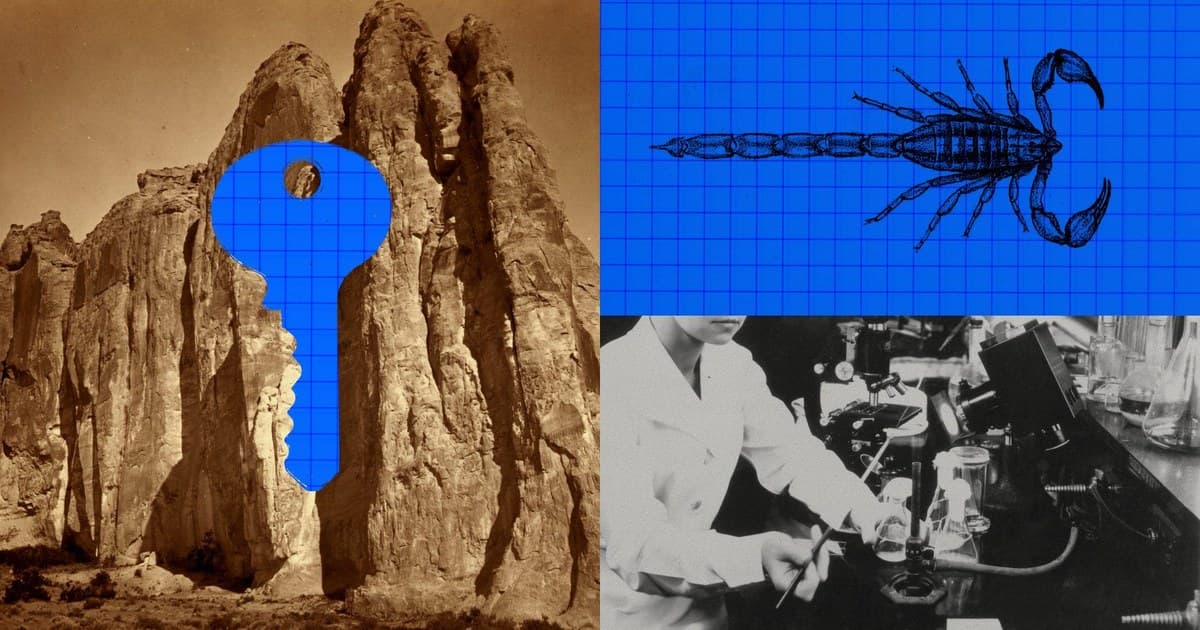
What happened
On October 20, 2026, Anthropic published How Claude designed protein binders against scorpion neurotoxins, with a full technical report. An internal Claude research model, working inside Claude Science, designed minibinders (small proteins built to attach tightly to a target) against five scorpion venom neurotoxins. Two contract labs, Adaptyv Bio and Twist Bioscience, tested 211 designs, and 17 met Anthropic's criteria for a binder. All 211 designs and their data are public on Hugging Face. This page is the long-form briefing behind the BSH Technologies Instagram carousel.
The project started with a question from Citrini Research, a financial research firm: could Claude help a group of motivated non-experts take on a real problem in human health? Anthropic's life-science team brainstormed with Claude and settled on scorpion venom.
Why scorpion venom
- The toll. Scorpions sting 1.2 million or more people a year, causing more than 3,250 deaths, mostly children in places with limited access to medical care. With so little investment, scorpion envenomation has been described as a neglected tropical disease.
- How the toxins kill. The most dangerous scorpion neurotoxins latch onto sodium channels in nerve cells, making nerves fire at the wrong time. That floods the body with stress chemicals such as adrenaline and, in severe cases, leads to heart failure and fluid in the lungs.
- Today's antivenoms. They are made by immunising horses with venom milked from thousands of scorpions, then purifying antibodies from the horses' blood. That takes months, works best when given early, covers only a few toxins, and is expensive or scarce in many regions.
- The de novo idea. A protein designed from scratch to cover a toxin's channel-binding site could stop it reaching the channel, and could be tuned for potency and stability. An earlier academic effort had done this for snake neurotoxins; Anthropic says no de novo binders against scorpion neurotoxins had been described before.
1. The search: 318,484 designs in 64 hours
- Five targets, four regions. Cn2 (Mexico), Ts1 (Brazil), AaH I and AaH II (North Africa) and LqhIII (Middle East). They share one overall fold but are only 26% to 62% identical in sequence, which made multi-toxin designs a hard test.
- Claude made the calls. It searched the Protein Data Bank and AlphaFold database for structures, picked five hotspot residues per toxin, set the quality thresholds, chose how much to lean on each of 12 design tools, and devised the multi-toxin strategy.
- The numbers. Claude generated 318,484 designs, filtered out anything resembling a toxin or known protein, and co-folded 553,052 design-toxin pairs. After 64 hours and four follow-up prompts from the team it produced a final list of 180 designs. The campaign used on the order of 10,000 GPU hours; Anthropic says a simplified single-agent, single-GPU, 24-hour version reaches comparable in-silico scores.
2. The lab test: 211 designs, two labs
- What was tested. Claude's 180 picks plus 31 added by the team with Claude's help: 60 single-toxin designs (12 per toxin), 30 against the two beta toxins, 30 against the three alpha toxins and 91 against all five. At Anthropic's request, Claude itself emailed the sequences to Twist Bioscience, in messages flagged as written by Claude.
- How binding was measured. Adaptyv Bio made the proteins in a cell-free system; Twist Bioscience made them in human kidney cells fused to an antibody stem (Fc). Both measured binding by surface plasmon resonance (SPR), which gives a dissociation constant (KD): the lower, the tighter.
- A strict bar. A design counted as a binder only if it was a hit at both labs, bound in every replicate with every KD at 1 micromolar or tighter, and showed no signal against an unrelated human protein (CLEC12A) used to catch "sticky" designs.
3. The result: 17 binders
- By toxin. Seven binders against Cn2, four against AaH II, four against AaH I and two against LqhIII. None against Ts1.
- Hit rate. 11 of the 60 single-toxin designs were binders (18%), which Anthropic says is typical of protein design campaigns.
- The best ones. Cn2-B1 and Cn2-B2 bound Cn2 at both labs with single-digit nanomolar affinity. Cn2-B1 is a 104-amino-acid protein designed with RFdiffusion3, with a KD of about 3.1 nM at Adaptyv Bio and 1.7 nM at Twist.
- The miss. No design aimed at several toxins met the criteria for more than one, so the cheaper "universal cocktail" idea did not come out of this run.
4. The catch: this is not an antivenom yet
- Same site as a known antibody. Competition experiments suggest both Cn2 binders attach on or near the site of LR, an antibody reported to neutralise Cn2 in mice. That hints they would block the toxin, but it is not proof.
- What was not done. Binding was shown only against recombinant toxins grown in the lab. No design was tested for neutralisation in cells or for protection in animals, and Anthropic explicitly does not claim an antivenom.
- Next steps. Confirm binding to toxin purified from real venom, run patch-clamp tests on sodium channels, then test in mice. A real drug must also be safe, stable, affordable and available where stings happen.
- Expert view. Susana Vázquez Torres (CNIO, Madrid) says binding "is no longer the main bottleneck"; Timothy P. Jenkins (Technical University of Denmark) calls it a showcase of AI-driven discovery for neglected diseases.
What it means if you are learning AI
This is a clear example of where agentic AI is heading: not one model answering one question, but an agent that picks tools, sets its own filters, runs hundreds of thousands of experiments in software and hands a shortlist to real labs. The skills that matter are the ones around the model: knowing the domain well enough to set the right goal, building evaluation bars that cannot be gamed, and checking results against the physical world. The open dataset of 211 designs with lab data is a good place to start exploring.
Sources
- Anthropic: How Claude designed protein binders against scorpion neurotoxins (Oct 20, 2026)
- Anthropic technical report: De novo design of protein binders against scorpion toxins with Claude (PDF)
- Hugging Face dataset: Anthropic/scorpion-toxin-binder-design
- Proteinbase: Claude-designed binders against scorpion neurotoxins
- Citrini Research: Citrini Therapeutics
Frequently asked questions
What did Claude do in Anthropic's scorpion toxin study?
An internal Claude research model ran a largely autonomous protein design campaign against five scorpion neurotoxins. Over 64 hours it generated 318,484 designs, co-folded 553,052 design-toxin pairs and picked 180 for lab testing, steered by an initial prompt and four follow-ups.
How many of Claude's designs worked?
Adaptyv Bio and Twist Bioscience tested 211 designs and 17 met Anthropic's strict binder criteria: seven against Cn2, four against AaH II, four against AaH I and two against LqhIII. The best, Cn2-B1 and Cn2-B2, bound Cn2 with single-digit nanomolar affinity.
Is this a scorpion antivenom?
No. The designs were shown to bind recombinant toxins only. None has been tested for neutralisation in cells or protection in animals, and Anthropic says it does not claim to have produced an antivenom.
Why does scorpion venom matter?
Scorpions sting 1.2 million or more people a year, causing more than 3,250 deaths, mostly children in places with limited medical care. Current antivenoms are made in horses, take months to produce and cover only a few toxins.
Can I access the designs?
Yes. Anthropic released all 211 designs and their binding data as the Hugging Face dataset Anthropic/scorpion-toxin-binder-design.
From the blog
View all posts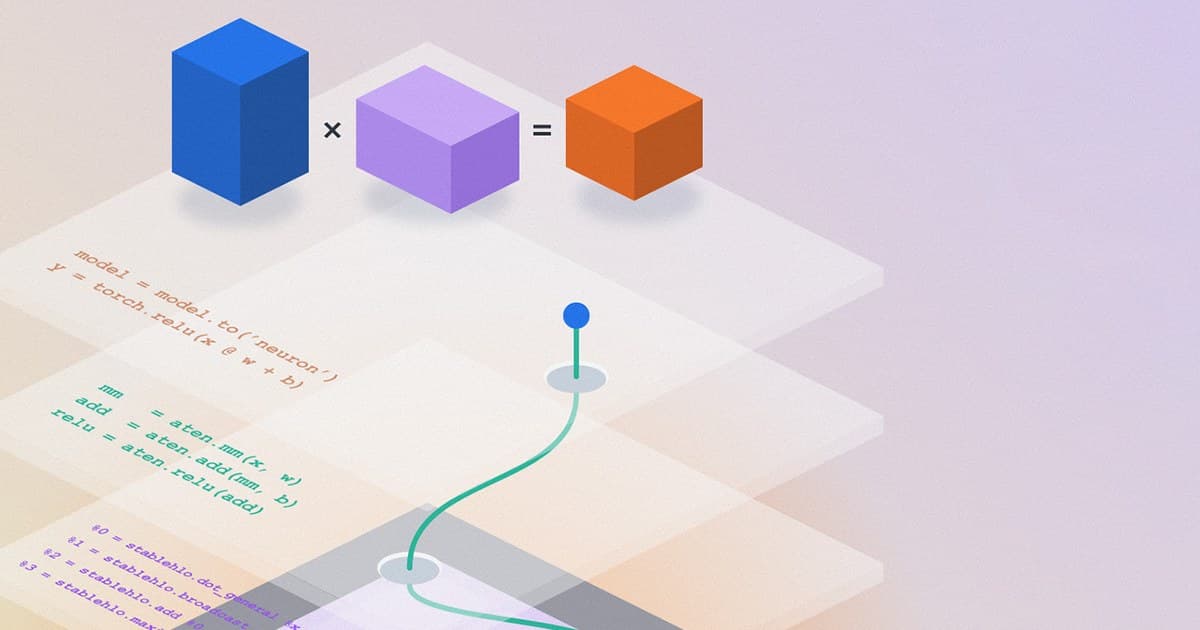
Amazon's TorchNeuron: Your PyTorch Code Now Runs Natively on AWS Trainium, No Rewrite Needed
Amazon has released TorchNeuron, a native PyTorch backend for its Trainium AI chips, as an open-source public beta at PyTorch Conference on October 20, 2026. Existing PyTorch code moves to Trainium with a single device change, Amazon tests it nightly against 100,000 Hugging Face models, and Deepgram says it gets about 60% more audio per dollar than on GPUs. Here is how it works, what is still missing, and why it is aimed squarely at Nvidia's software lock-in.


Anthropic's Own Data: Junior Tech Hires Fell From 27% to 9% as AI Agents Hit 6x Human Hours
On October 16, 2026, Anthropic published a rare inside look at how AI has changed its own workforce: a much smaller share of junior technical hires, AI agents logging six hours for every human hour, five times more code per engineer, and human attention as the new bottleneck. Two days later it pledged 5% of its shares to a new Public Benefit Fund, with AI's impact on jobs as a named focus. Here is what the data says and what it means if you are starting a tech career.