DeepSeek V4.1-Flash-1017: The Open MIT Model That Tops Opus 5 on DeepSWE, Plus a $0.75 Search API
On October 17, 2026, DeepSeek upgraded its Flash model to V4.1-Flash-1017, an open-weight MIT-licensed update that scores 77.0 on DeepSWE v1.1, ahead of Claude Opus 5 in DeepSeek's own table, while finishing tasks faster with shorter outputs. It also opened its in-house search engine to developers at $0.75 per 1,000 calls. Here is the model, the benchmarks, the memory trick, the new API and the price.
What happened
On October 17, 2026, DeepSeek posted two items in its API change log. First, its Flash model was upgraded to DeepSeek-V4.1-Flash-1017 on the web, the app and the API. Second, DeepSeek opened up its in-house search engine to every developer as two new endpoints, Search and Fetch.
The weights are on Hugging Face under the MIT License. API users don't need to change anything: the model name stays deepseek-flash and the price is unchanged. This page is the long-form briefing behind the BSH Technologies Instagram carousel.
1. The model: 552B parameters, 8B awake on input
- What 1017 is. DeepSeek calls it a minor update to DeepSeek-V4.1-Flash, which launched on September 10. Same architecture, new post-training. According to The Decoder, DeepSeek trained it with reinforcement learning from self-feedback for end-to-end project work.
- Size. The V4.1-Flash model card and tech report describe a multimodal Mixture-of-Experts model with 552B backbone parameters, plus a separate 196B-parameter Engram conditional memory, and a 1M-token context.
- Why it's cheap to run. It uses a Causal Encoder-Decoder design: a 40-layer Transformer split into a 20-layer encoder and a 20-layer decoder. As a result only 8B parameters are active per token while reading input (prefill) and 16B while writing output (decode). Each MoE layer has 1 shared and 384 routed experts, with 6 routed experts active per token.
- Training. Trained from scratch on a 45T-token multimodal corpus. It reads images natively and outputs text.
2. The benchmarks: 77.0 on DeepSWE
In DeepSeek's own table on the 1017 model card, the update beats the September release on every benchmark it reports:
- DeepSWE v1.1: 77.0, up from 74.2, ahead of Claude Opus 5 (74.0), GPT-5.6 Sol (73.0), Kimi K3 (67.5) and GLM-5.3 (66.9).
- Terminal-Bench 4.0: 42.3, up from 31.2. Opus 5 still leads at 51.8.
- Automation-Bench v1.0.6: 60.5 (Opus 5: 50.3). Agents' Last Exam: 35.4 (Opus 5: 28.6). Apex Bench v1.1: 72.1 (Opus 5: 65.8).
- Where it trails: HLE without tools is 42.6 against Opus 5's 56.3, and ProgramBench is 29.1 against 37.0. NL2Repo-Bench (68.2 vs 75.3) and the visual agent tests (BabyVision 92.5 vs 94.1) also favour Opus 5.
- Cost per task. The Decoder reports that DeepSeek's cost chart puts the 77.0 DeepSWE result at just under $0.20 per task, against about $0.50 for the September version.
These are vendor-reported numbers. Terminal-Bench 4.0 was run in the Claude Code harness and DeepSWE in mini-SWE-V2. Independent results were still thin at release, though an early test by sference found about 20 to 30% less reasoning text on math problems with the same accuracy.
3. The memory trick: 890 bytes per token
- Why KV cache matters. Long-running agents read far more than they write, and every token they keep in context costs GPU memory. That cache is often the real limit on cost.
- What DeepSeek changed. V4.1-Flash shares keys and values across layers with Compressed Sparse Attention 2 and stores the main cache in FP4. The global KV cache drops to 890 bytes per token, about a quarter of V4-Flash (3,514 bytes) and roughly 1/437 of DeepSeek-V1 (389,120 bytes).
- On disk too. A deployment trick called SWA Bounded Replay cuts the persistent cache kept on SSD or in host memory to roughly 1/8 of V4-Flash.
4. The new API: DeepSeek Search and Fetch
- Two endpoints. Per the Search & Fetch guide,
POST /v1/tools/searchreturns ranked web results with snippets, summaries, dates and an authority score.POST /v1/tools/fetchreturns a single page as Markdown. Both use your normal DeepSeek API key. - What powers it. DeepSeek says the engine behind it already handles hundreds of millions of searches a day, indexes hundreds of billions of pages, and filters SEO spam and low-quality AI-generated content.
- Price and limits. $0.75 per 1,000 successful calls for each endpoint. Empty results, failures and timeouts are not billed. Each endpoint is capped at 5 requests per second per account.
- Free for now in coding tools. Server-side search calls made through DeepSeek Harness, Claude Code or Codex are free until 00:00 Beijing time on November 1, 2026 (16:00 UTC on October 31), as PPC Land also notes.
5. The price and the licence
- Model price unchanged. From Models & Pricing: at peak, $0.30 per 1M input tokens (cache miss), $0.006 on a cache hit, and $1.20 per 1M output tokens. Off-peak rates are half. Peak is 01:00 to 04:00 and 06:00 to 10:00 UTC on weekdays; weekends and Chinese public holidays are off-peak all day.
- Limits. 1M context, up to 384K output tokens, tool calls, JSON output, vision, and both OpenAI- and Anthropic-compatible APIs.
- Open weights. The 1017 weights and code are MIT-licensed on Hugging Face, so teams can self-host, fine-tune and use it commercially.
Why it matters
A model that activates only 8B parameters on input, with a tiny KV cache, is built for exactly the long, read-heavy work agents do. Pairing it with a cheap first-party search API means one key now covers both the model and the web layer behind an agent. For teams watching their AI bill, it is worth testing against the bigger closed models on your own tasks, because vendor benchmarks are only the start.
Sources
- DeepSeek API Docs: Change Log (Oct 17, 2026)
- Hugging Face: deepseek-ai/DeepSeek-V4.1-Flash-1017
- Hugging Face: DeepSeek-V4.1-Flash model card and tech report
- DeepSeek API Docs: Search & Fetch
- DeepSeek API Docs: Models & Pricing
- The Decoder: Deepseek V4.1 Flash 1017 beats larger rivals in agentic tasks (Oct 17, 2026)
- MarkTechPost: DeepSeek Just Released V4.1-Flash-1017, Scores 77.0 on DeepSWE, Opens Search API (Oct 17, 2026)
- PPC Land: DeepSeek prices web search for AI agents at $0.75 per 1,000 calls (Oct 17, 2026)
- sference: We Benchmarked DeepSeek's V4.1 Flash Update
How BSH can help
At BSH Technologies we help teams choose and run the right model for the job: benchmarking open-weight models like DeepSeek against closed ones on your own workloads, self-hosting where data must stay in-house, and building agents with search, tools and cost controls built in. If you want lower AI bills without guessing, our Thrissur engineers can help you test, plan and ship it.
Frequently asked questions
What is DeepSeek V4.1-Flash-1017?
It is an October 17, 2026 update to DeepSeek-V4.1-Flash, DeepSeek's multimodal Mixture-of-Experts model with 552B backbone parameters and a 1M-token context. It now powers the deepseek-flash API model, the DeepSeek website and app, and its weights are on Hugging Face under the MIT License.
Does it beat Claude Opus 5?
On some benchmarks, in DeepSeek's own table. It scores 77.0 on DeepSWE v1.1 against Opus 5's 74.0, and leads on Automation-Bench, Agents' Last Exam and Apex Bench. Opus 5 stays ahead on HLE (56.3 vs 42.6), Terminal-Bench 4.0 (51.8 vs 42.3), ProgramBench and NL2Repo-Bench.
What are DeepSeek's Search and Fetch APIs?
Two raw JSON endpoints opened on October 17, 2026. Search returns ranked web results from DeepSeek's in-house search engine; Fetch returns a web page as Markdown. Each costs $0.75 per 1,000 successful calls and is limited to 5 requests per second per account.
How much does the model cost to use?
Pricing is unchanged: at peak, $0.30 per 1M input tokens on a cache miss and $1.20 per 1M output tokens, with off-peak rates at half price. Weekends are off-peak all day.
Do I need to change my code?
No. Keep using the deepseek-flash model name. The legacy deepseek-v4-flash names are also routed to the new model.
From the blog
View all posts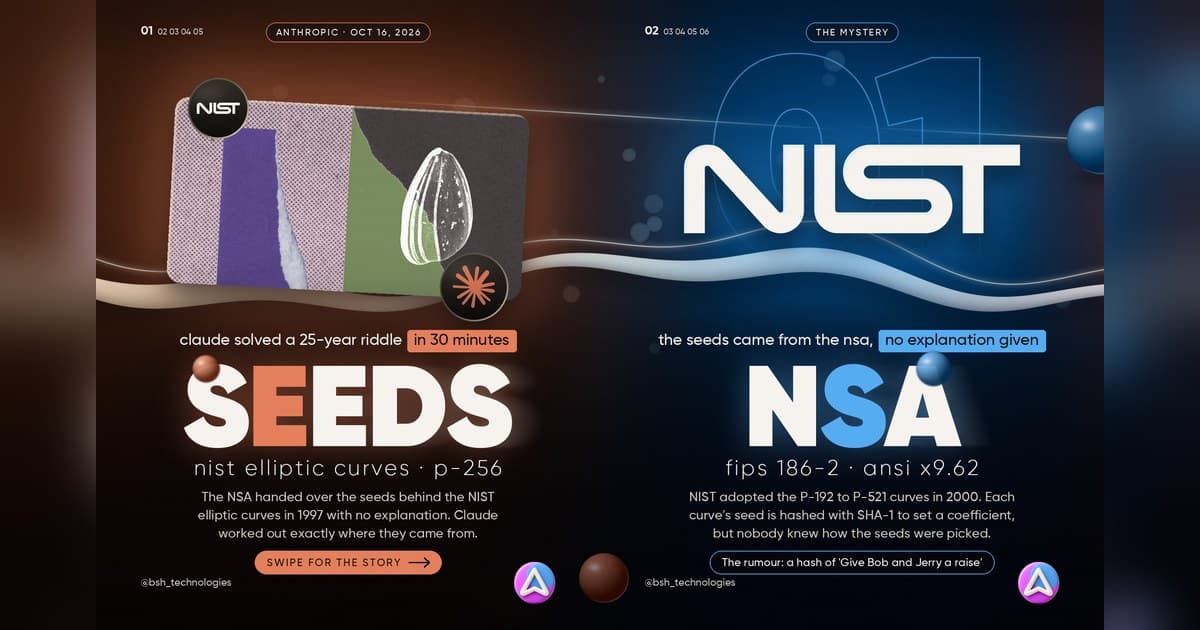
Claude Solved the 25-Year Mystery of the NIST Elliptic Curve Seeds
On October 16, 2026, Anthropic said Claude worked out in under half an hour how the NSA-supplied seeds behind the NIST P-curves were made: not a hashed passphrase, but output of the C library's lrand48 generator seeded with 1997-98 Unix timestamps. Here is the riddle, how Claude cracked it, why it rules out a backdoor, and what is still unexplained.

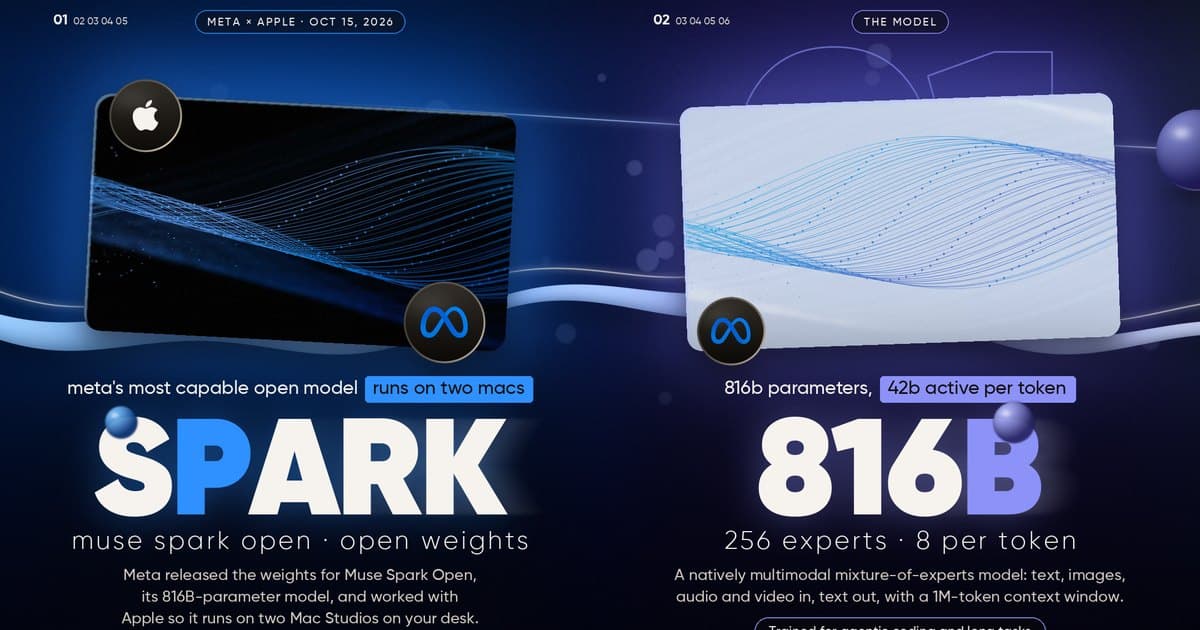
Meta Muse Spark Open: An 816B Open-Weight Model That Runs on Two Mac Studios
On October 15, 2026, Meta released the weights for Muse Spark Open, an 816B-parameter mixture-of-experts model it calls the most capable US open-weight model to date, and worked with Apple so it runs locally on two M5 Ultra Mac Studios. Here is what the model is, what it takes to run, how fast it is, where it trails rivals and what the license allows.