Claude and the Riemann Hypothesis: How Anthropic's Levent Alpöge Proved It, and How Lean Verified 17 Million Lines
On November 20, 2026, Anthropic mathematician Levent Alpöge said he and Claude had proved the Riemann Hypothesis, publishing the proof only as a 17-million-line Lean library. A day later the Lean and Mathlib communities certified it correct. Here is what the problem is, how Claude helped, how the proof was checked and what happens next.
What happened
On November 20, 2026, Levent Alpöge, a number theorist on Anthropic's technical staff, posted a four-page note on his website that opens: “I believe I have, working with Claude, discovered a proof of the Riemann Hypothesis.” He says the same method also settles the Generalized Riemann Hypothesis, and that he and Claude have formalized the arguments without assumptions. There is no traditional paper. The proof was released as a library for the Lean proof assistant, split across 14 download archives. One day later, on November 21, the Lean and Mathlib communities published a joint statement, endorsed by the Lean FRO and the Mathlib Initiative: “We have full confidence that Alpöge's proof of the Riemann Hypothesis is correct.” This page is the long-form briefing behind the BSH Technologies Instagram carousel, with every claim linked to a primary source.
The Riemann Hypothesis in one paragraph
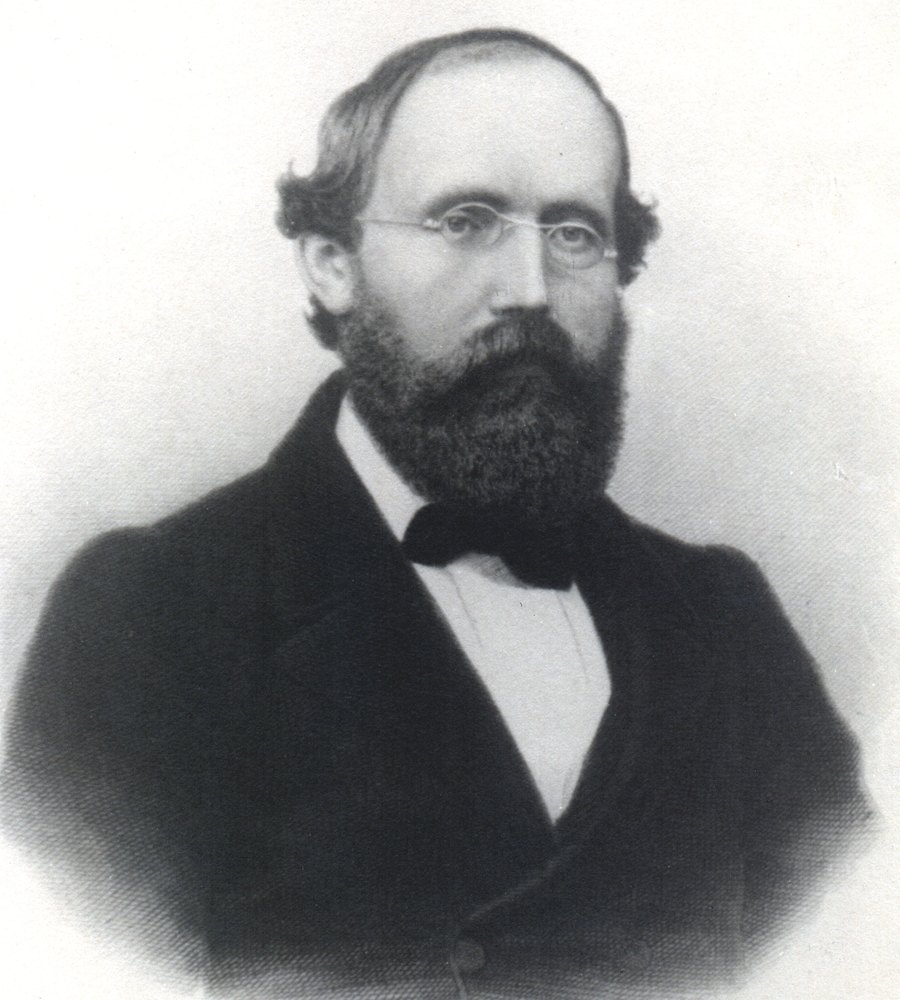
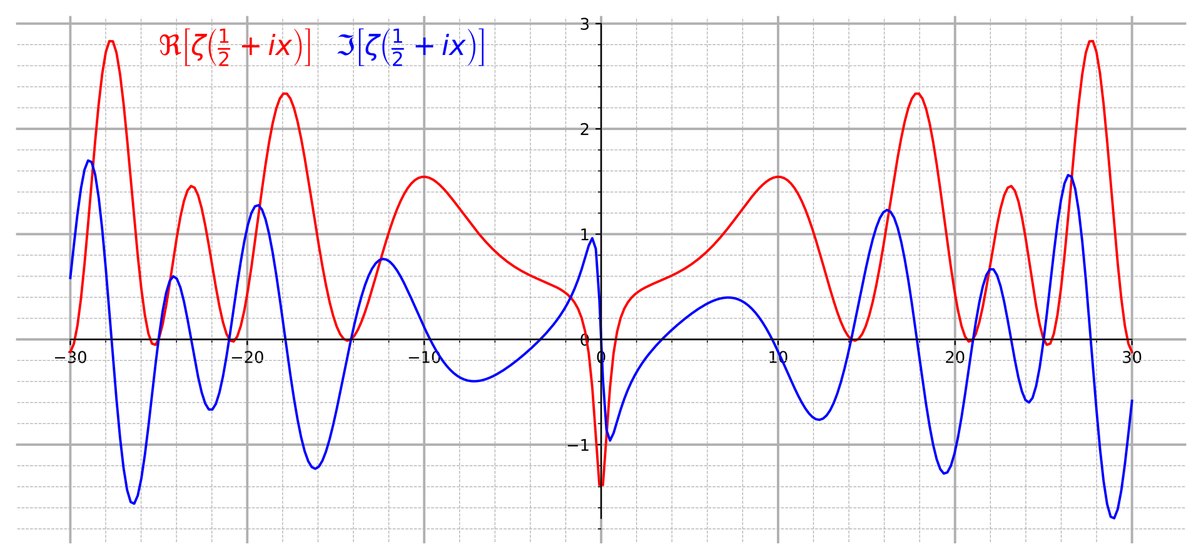
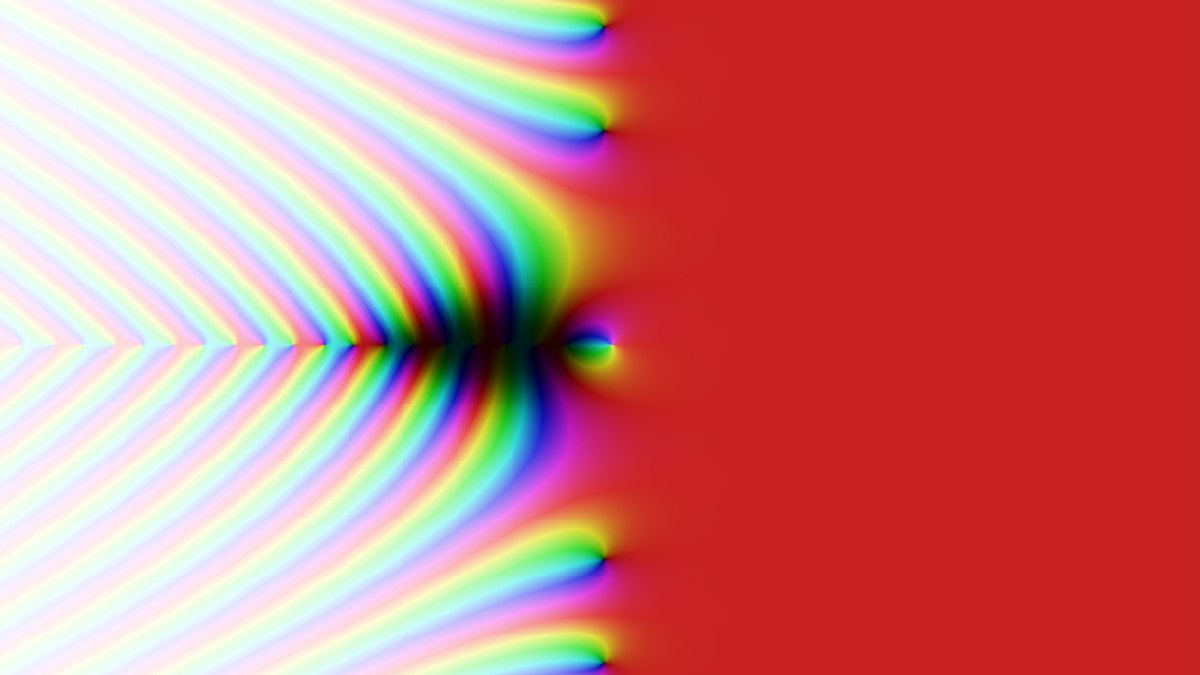
In 1859, Bernhard Riemann studied how prime numbers are spread along the number line. He tied their distribution to the zeros of what is now called the Riemann zeta function, and conjectured that, apart from some “trivial” zeros, every zero lies on one vertical line in the complex plane, the critical line where the real part equals 1/2. If that is true, the primes are scattered about as evenly as randomness allows, and a large body of mathematics that already assumes it stands on solid ground. It is one of the seven Clay Millennium Prize Problems, each carrying a $1 million prize, and it had resisted proof for 167 years.
How Claude helped
According to Alpöge's note, he steered the work by combining two ideas from a simpler “toy” setting and guiding the pair to the right analogous situation, and then “Claude began to leave me in awe.” His most-quoted line: “Claude far outpaced me near the finish line. No, Claude flew, and danced, and sparkled near that finish line.” The single example he gives for fellow mathematicians: the argument descends from Stepanov's proof of the Riemann Hypothesis over function fields, which needs “multiplicity”, something hard to find over the integers. The fix was to chain theta lifts, each mimicking multiplicity, and Claude proposed that the chain should have length √X for a von Mangoldt sum of length X. A Claude-assembled timeline in the note starts with a “Stepanov determinant” on October 6, 2026; The Guardian reports the work took about six weeks.
This did not come out of nowhere. In August, Anthropic reported that an unreleased Claude research model had raised the proven share of zeta zeros on the critical line from 41.6% to 67.2%, while cautioning that those techniques were not expected to prove the full hypothesis. It also follows other recent AI maths results we have covered, including Claude cracking the NIST elliptic-curve seeds puzzle and OpenAI's release of 722 AI-generated maths manuscripts.
A proof that is code: 17 million lines of Lean
Alpöge chose not to publish a conventional paper. In his words, posting a “massive unreadable travesty” would be inappropriate, so he “decided to only present Lean”; a footnote says a fully written-out version hit 250,000+ pages. Lean is a programming language and proof assistant in which every logical step must be accepted by a small trusted “kernel”. The Lean community statement describes the release as 17 million lines of code that depend directly only on Mathlib, Lean's community mathematics library. MIT's Andrew Sutherland reports 175,187 modules compiling with zero errors, with the headline theorems relying only on Lean's three standard axioms.
How the proof was verified
Kevin Buzzard of Imperial College London had, a week earlier, set out four questions to ask of any AI-generated Lean proof. The joint statement says all four are now satisfied:
- The statement is right. The theorem proved is Mathlib's own
RiemannHypothesisdefinition, vetted by Lean and number theory experts. - It compiles. Dozens of people reproduced the build and the same raw proof export file.
- It proves the right thing. Two independent tools (
comparatorandcon-leche --compare) confirmed the theorem is exactly Mathlib's statement, with nothing redefined. - The proof is valid. The export was checked by Lean's official kernel and independent checkers including nanoda, con-leche and con-ron, some of which come with a formal proof that they cannot accept a false proof.
Sutherland's verification log lists the details, including a sandboxed rebuild that reproduced the 61.6 GB export byte for byte. He told Scientific American: “Honestly the chance that anything is fishy here is approximately zero.”
The reaction, and the rival human proof
Fields medallist James Maynard told Nature that if it fully checks out, “it is clearly a historic milestone in mathematics,” while warning it will take a long time for mathematicians to digest. Andrew Granville called Alpöge's write-up “garbled” and questioned the timing, one day after Anthropic's Nasdaq debut; Alpöge addresses this in his note, writing that “the precise timing is horrible” and that the cynical reading “is false”. Hours after his announcement, Stanford's Ravi Vakil posted a “hurried announcement” of a separate, entirely human proof draft by Alessandro Maria Masullo, which Nature reports is still being reviewed and revised. As of the reports by The Verge and Nature, Anthropic itself had not commented.
What happens next
- The Millennium Prize is not automatic. Under Clay Mathematics Institute rules, as summarised by The Verge, a solution must be published and survive at least two years of scrutiny with general acceptance before it can be considered for the $1 million prize.
- A human-readable proof is still to come. Alpöge says he intends to understand, simplify and properly write up the argument, and expects much shorter proofs to follow.
- Formal verification is now the trust layer. Nobody will read 250,000 pages; confidence rests on independent proof checkers, which is why the multi-kernel checks mattered more than the initial headlines.
For the latest Claude models behind this kind of work, see our coverage of Claude Fable 5.2 and Mythos 5.2.
Sources
- Levent Alpöge: note announcing the proof (alpo.ge, Nov 20, 2026)
- Lean and Mathlib communities: Lean verification of the Riemann Hypothesis (Nov 21, 2026)
- Andrew Sutherland (MIT): verification files for the Lean proof
- Kevin Buzzard (Xena): “…and the proof is checked in Lean”
- Anthropic: Learning more about Claude's mathematical capabilities (Aug 10, 2026)
- Clay Mathematics Institute: The Riemann Hypothesis
- Scientific American: The AI Riemann hypothesis proof is true, independent mathematicians confirm
- Nature: Mathematicians astounded by AI and human-written proofs of iconic Riemann hypothesis
- The Guardian: Two groups verify mathematician's claim that Claude helped prove mathematics problem
- The Verge: Anthropic mathematician claims to have solved prestigious Millennium Prize problem with Claude
Frequently asked questions
Did Claude prove the Riemann Hypothesis?
Anthropic mathematician Levent Alpöge announced on November 20, 2026 that he found a proof working with Claude, and released it as a Lean library. On November 21 the Lean and Mathlib communities certified the statement and proof as correct.
Who is Levent Alpöge?
A number theorist on Anthropic's technical staff, on leave from Harvard University according to Nature.
How was the proof verified?
The 17-million-line Lean library was compiled independently by many people, matched against Mathlib's RiemannHypothesis statement with comparator and con-leche, and checked by Lean's kernel plus independent checkers such as nanoda, con-leche and con-ron.
Will Alpöge win the $1 million Millennium Prize?
Not yet. Clay Mathematics Institute rules require a published solution that has gained general acceptance over at least two years before it can be considered.
Is there also a human proof?
Stanford's Ravi Vakil posted a draft all-human proof by Alessandro Maria Masullo the same day. Nature reports it is still under review and revision.
From the blog
View all posts
Microsoft's 7 New MAI Models at Ignite 2026: Code 2, Cyber 2 Flash, Image 2.7, Realtime 1 and More
At Ignite on November 17, 2026, Microsoft AI launched seven in-house MAI models: Cyber 2 Flash, Code 2, Code 2 Flash, Image 2.7, Realtime 1, Dragon Copilot Transcribe and Decision 1.1. Here is what each one does, how it benchmarks against GPT-6 and Claude, what it costs and where you can use it.


Anthropic's Nasdaq Debut Explained: ANT Pops 34%, Closes at $97.17 After the Biggest IPO on Record
On November 19, 2026, Anthropic began trading on the Nasdaq as ANT after raising $81.3 billion at $83 a share, the largest IPO in history. The stock opened at $111.50, closed at $97.17 (up 17%) with a fully diluted value of about $1.8 trillion, and out-traded SpaceX's debut by volume.