OpenAI Images 2.6: GIFs From One Prompt, 50% Faster Images, Flare vs Sunburst and What It Costs
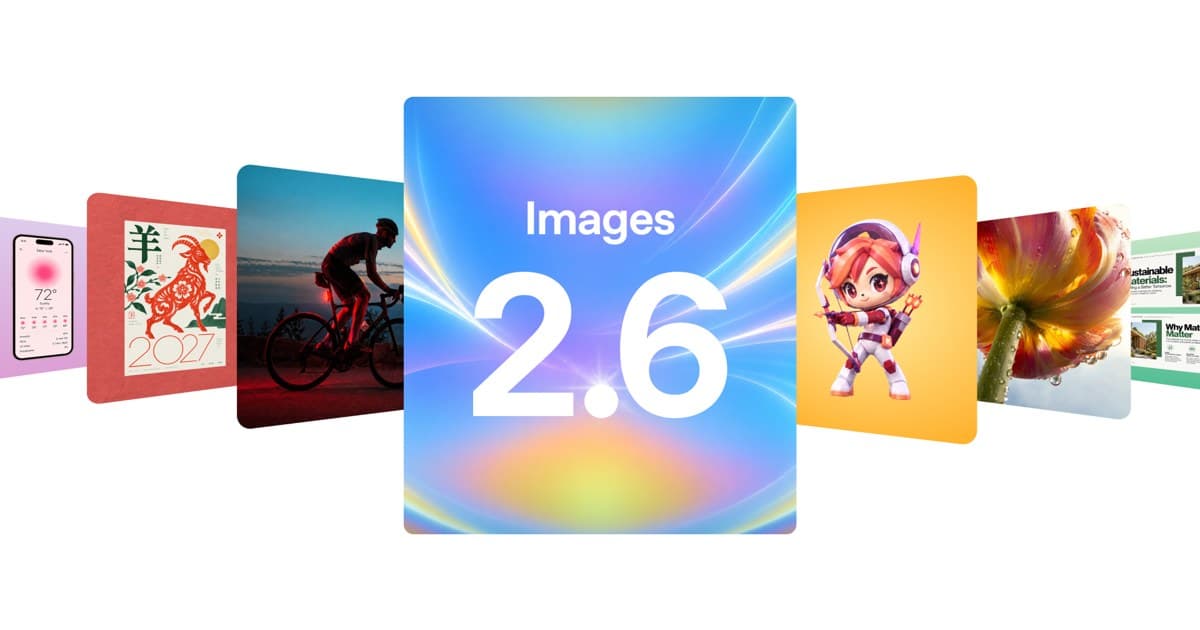
On November 4, 2026, OpenAI released Images 2.6 in ChatGPT, Codex and the API. It generates images 50% faster, can turn a single prompt or a rough sketch into a looping GIF, and gives developers two models, GPT-Image-2.6 Flare and Sunburst, plus image markup, SVG export and a new complexity setting.
What OpenAI released on November 4, 2026
On November 4, 2026, OpenAI announced Images 2.6, its latest image generation model, in ChatGPT, Codex and the API. OpenAI pitches it on three things: speed, motion (GIFs) and more precise editing that keeps characters, products and brand details consistent. OpenAI also says people now create 4 billion images per week across ChatGPT, Codex and the API, which is more than half a billion images a day. This page is the long-form briefing behind the BSH Technologies Instagram carousel.
50% faster: GPT-Image-2.6 Flare and Sunburst
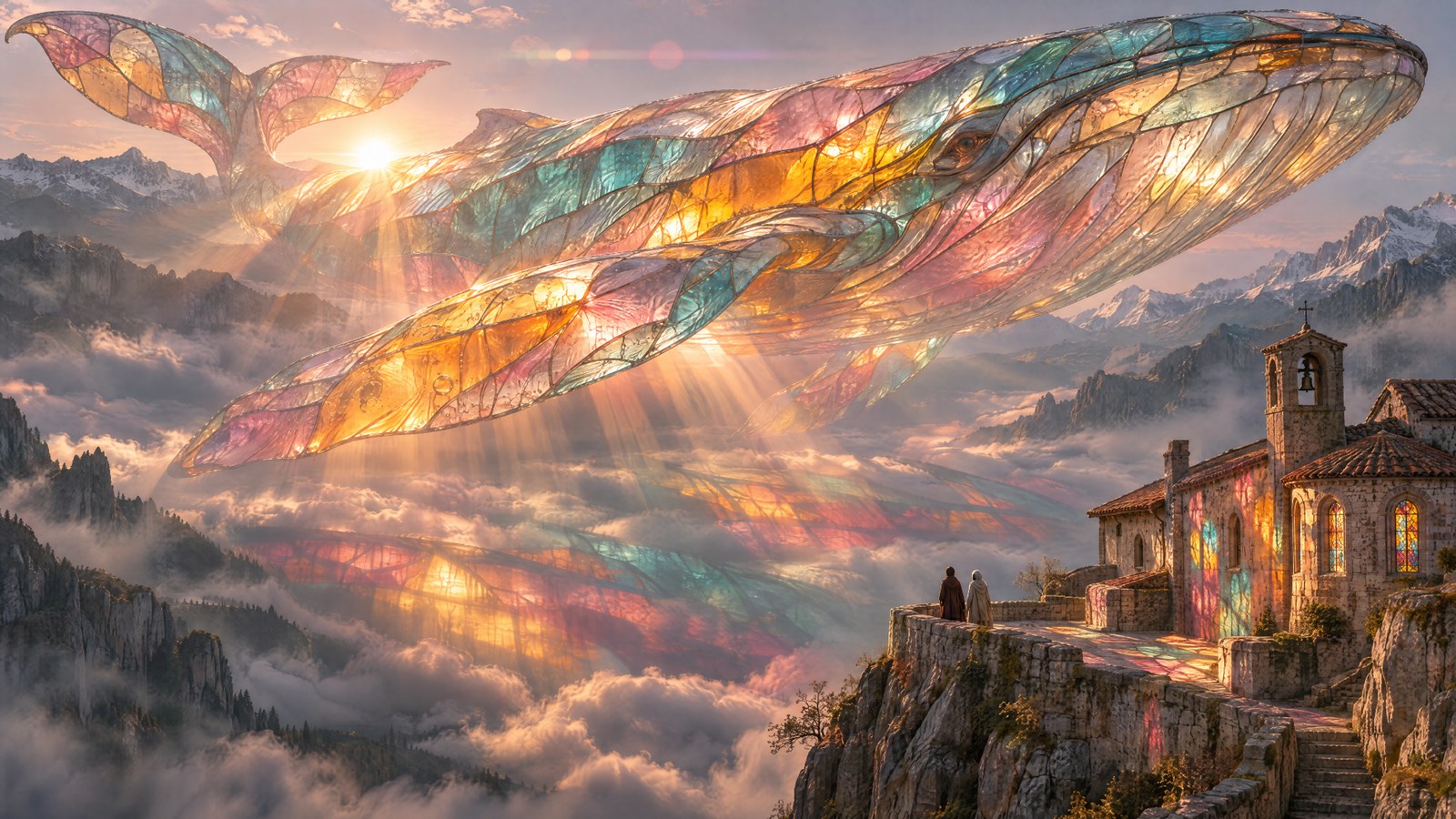
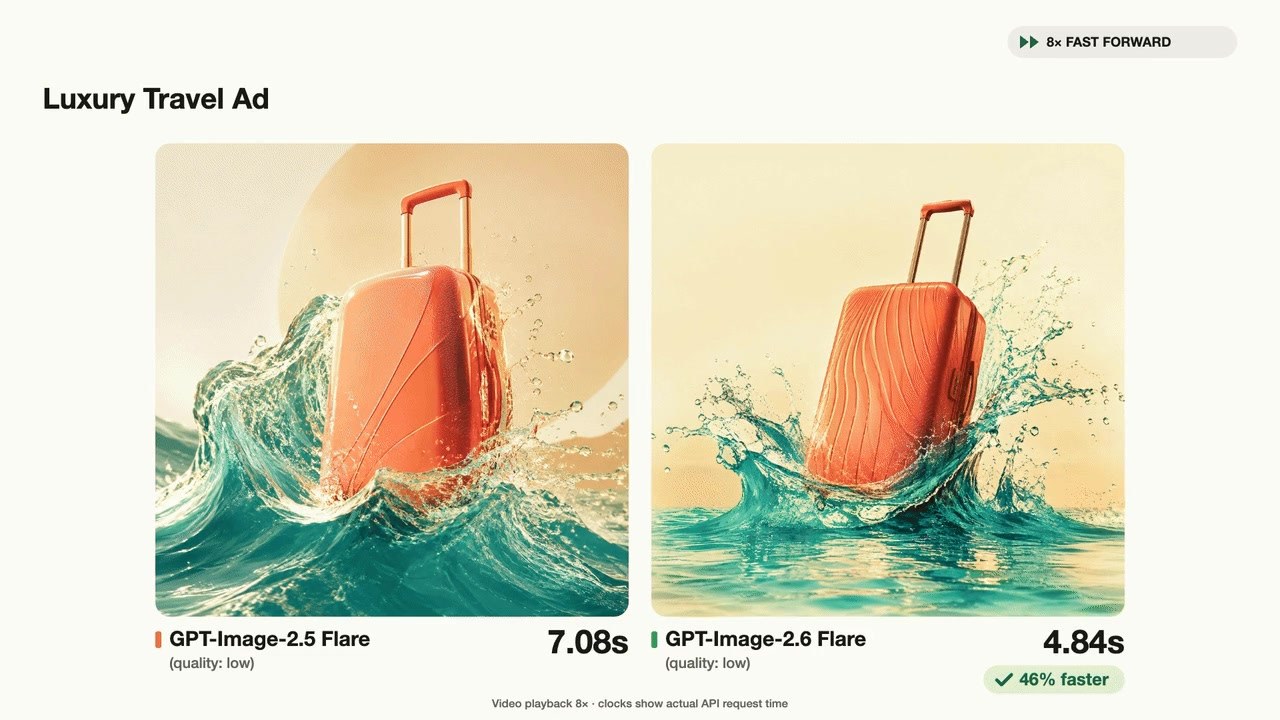
OpenAI says Images 2.6 generates images 50% faster than before. Developers choose between two API models:
- GPT-Image-2.6 Flare: the fast option. With quality set to low, it can generate an image in as little as six seconds. OpenAI says Flare also improves layout quality for posters, product imagery and other professional visuals.
- GPT-Image-2.6 Sunburst: the detail option. With quality set to medium or high, it delivers higher-quality images and even greater consistency across edits.
GIFs from a single prompt
The biggest new trick is motion. You ask for an animation sprite sheet (a grid of sequential frames) for a seamless looping GIF, and Images 2.6 produces it. OpenAI suggests uses such as animating a brand mascot for a campaign, making reactions and memes for social media, or building animated storyboards to explore character movement before video production. OpenArt's examples show a chibi office worker crying over a falling stock chart and cheering at a rising one, each made from one detailed prompt that spells out the sequence, the character and an exact 6-frame grid.

From a rough sketch to an animated character
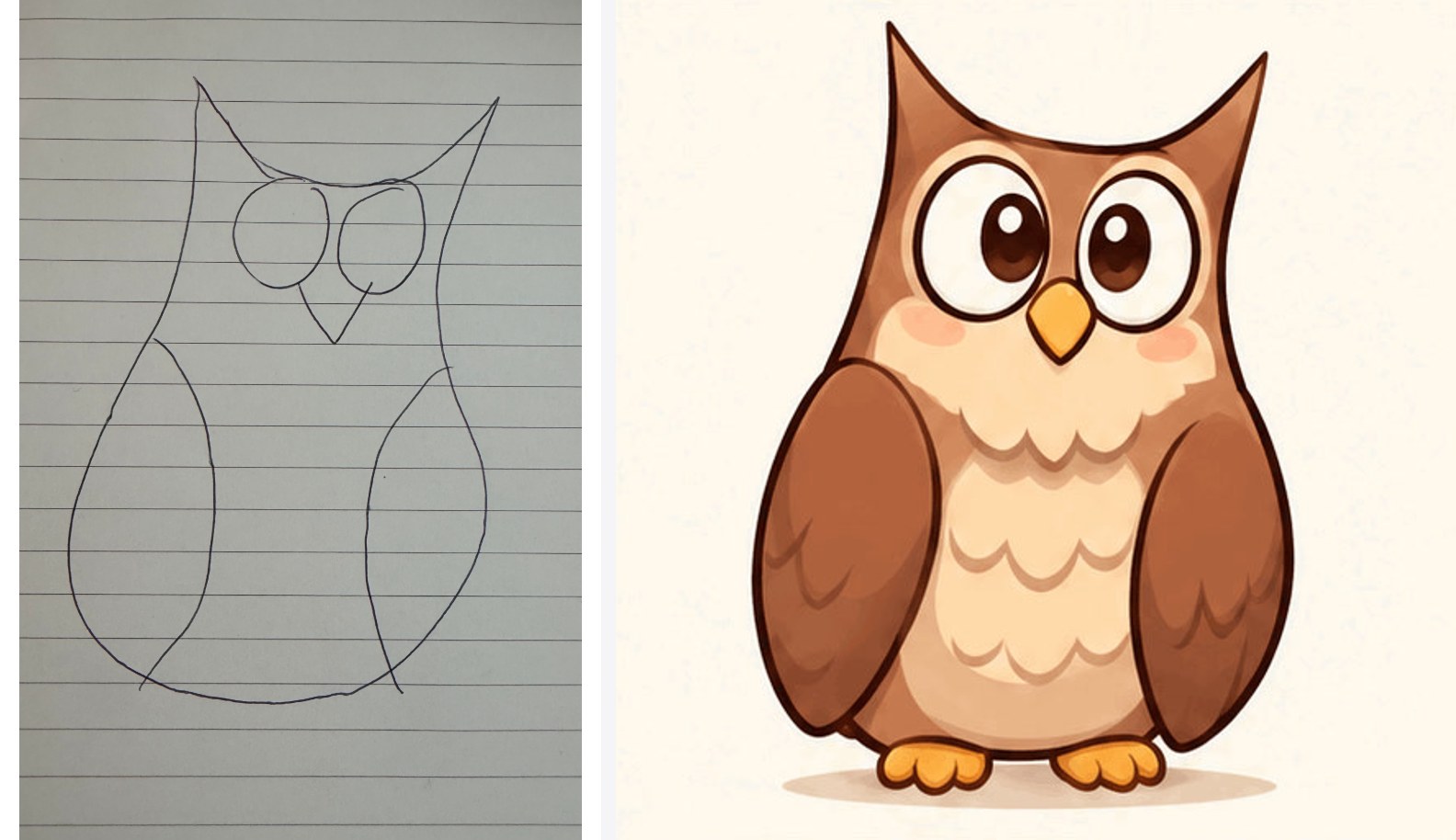
OpenAI says you don't need a polished design to start: even a simple sketch can become an expressive animated character for videos, games and more. Its demo turns a pen drawing of an owl on lined paper into a colourful cartoon owl. Town, a startup building an AI work assistant, used Images 2.6 in the API to explore how animated characters could bring more personality to everyday interactions at work.
New in the API: image markup, SVG export and complexity
Images 2.6 gives developers more control over how images are created, edited and handed to the next stage of a project:
- Image markup: already in ChatGPT, it now comes to the API, so teams can circle, cross out or point at exactly where a change should happen.
- SVG export: designs can be exported as SVG, ready for websites, apps and print. If you hand assets from design to code, our guide to the design-to-development handoff covers the workflow around it.
- Complexity parameter: a new setting that controls how much planning the model does for a request. Image quality controls detail and fidelity, while complexity guides how much goes into the scene. OpenAI recommends low complexity for most edits, and medium or high for scenes with many elements or constraints.

Consistent edits
Keeping a subject identical while changing one thing has been a weak spot for image models. OpenAI says Images 2.6, and Sunburst in particular, keeps characters, products and brand details consistent as you edit. In Higgsfield's example, the same red-haired knight keeps her face, pose and scene while her armour changes from green to red.
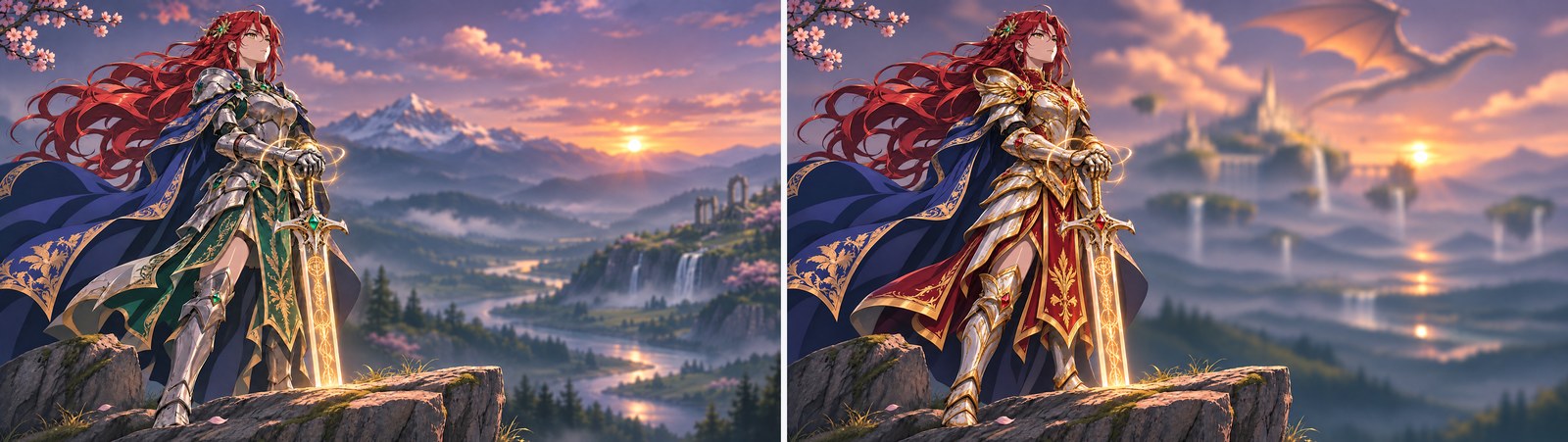
Partners quoted by OpenAI include OpenArt, Picsart and Figma Weave, which is adding GPT-Image-2.6 to its workflows.
Pricing and availability
Images 2.6 is available globally today in ChatGPT and Codex across all subscription tiers on desktop, mobile and web. In the API, both GPT-Image-2.6 Sunburst and GPT-Image-2.6 Flare are listed on OpenAI's pricing page at $8 per 1M image input tokens, $2 per 1M cached image input tokens and $30 per 1M image output tokens, with text input at $5 per 1M tokens ($1.25 cached). That matches the GPT-Image-2.5 prices, so the speed gain comes without a price rise. For OpenAI's text-model pricing, see our breakdown of GPT-6 Sol and Luna. OpenAI's safety evaluations for the model are in the Images 2.6 system card.
Why it matters
GIF output moves image models a step closer to video for everyday work: mascots, stickers, reaction loops and storyboards no longer need an animator for a first draft. Markup, SVG export and the complexity setting are aimed squarely at production teams who build image editing into their own apps. And because it ships inside Codex as well as ChatGPT, developers can generate and edit assets in the same place they write code. For more on how OpenAI is building out Codex, read our coverage of Dots, OpenAI's always-on agents and the Codex device GPT-6 Astra designed.
Sources
Frequently asked questions
What is OpenAI Images 2.6?
OpenAI's latest image generation model, released on November 4, 2026 in ChatGPT, Codex and the API. It is 50% faster than before, can create looping GIFs, and keeps characters, products and brand details more consistent across edits.
What is the difference between GPT-Image-2.6 Flare and Sunburst?
Flare is the fast model: at low quality it can generate an image in as little as six seconds and has better layout for posters and product visuals. Sunburst is for detail: at medium or high quality it gives higher-quality images and more consistency across edits.
How do I make a GIF with Images 2.6?
Ask for an animation sprite sheet for a seamless looping GIF, and describe the character, the sequence of actions and the frame grid. OpenArt's examples use 6 frames in a 3-column grid.
What is the complexity parameter?
A new API setting that controls how much planning the model does for a request. OpenAI recommends low complexity for most edits and medium or high for scenes with many elements or constraints.
How much does GPT-Image-2.6 cost?
OpenAI lists both Flare and Sunburst at $8 per 1M image input tokens, $2 per 1M cached image input tokens and $30 per 1M image output tokens, with text input at $5 per 1M tokens. That is the same as GPT-Image-2.5.
Who can use Images 2.6?
It is available globally in ChatGPT and Codex on all subscription tiers, on desktop, mobile and web, and in the API as GPT-Image-2.6 Flare and Sunburst.
From the blog
View all posts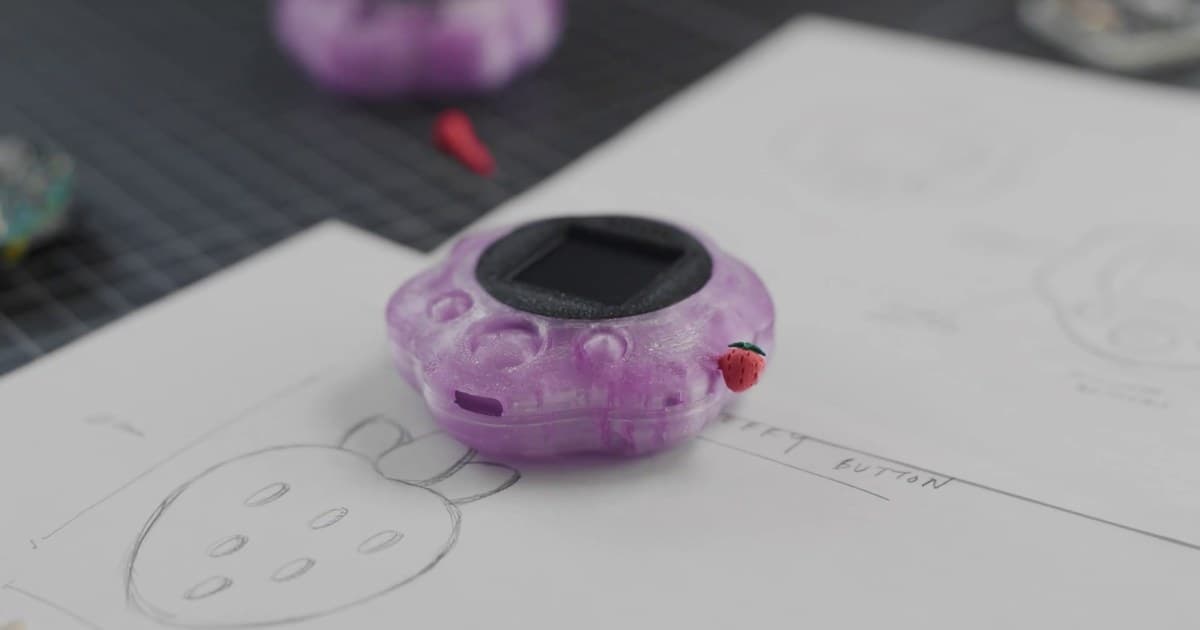
OpenAI's GPT-6 Astra Designed a Real Codex Gadget: What It Built, Where It Fell Short and the 0.875 BenchCAD Score
On November 3, 2026, OpenAI showed a handheld device for talking to Codex whose enclosure, circuit board, interface and firmware were designed by GPT-6 Astra. Two people built it in under a week as a side project. OpenAI also shared a 23-fold rise in hardware-team token use, a new internal model scoring 0.875 on BenchCAD 2.0, and new engineering trials with Mazda and Chip Ganassi Racing.

Anthropic's Amended IPO Filing Explained: $17.0B Quarter, $895.4B Compute Bill, 15% Margin and Who Keeps Control
On November 2, 2026, Anthropic filed Amendment No. 1 to its S-1 for a Nasdaq listing under the ticker ANT. It adds Q3 2026 results: $17.0 billion of revenue, more than 11,900 customers paying $100K+, $895.4 billion of committed compute spend, a 15% adjusted operating margin, a $23.3 billion net loss and a share structure that keeps 50.1% of the vote with the founders.