Gemini Robotics 2.5 Explained: Google DeepMind's Most Dexterous Robot Model, Apollo 2 at Mercedes-Benz and the Safety Numbers
On November 10, 2026, Google DeepMind introduced Gemini Robotics 2.5, its most capable vision-language-action model. Tested on 200+ tasks it scores 30% to 100% higher success than Gemini Robotics 2 and finishes 20% to 30% faster, helped Apptronik's Apollo 2 humanoid kit parts with a 96% success rate on Mercedes-Benz lines, and completes tasks safely 43% more often around people.
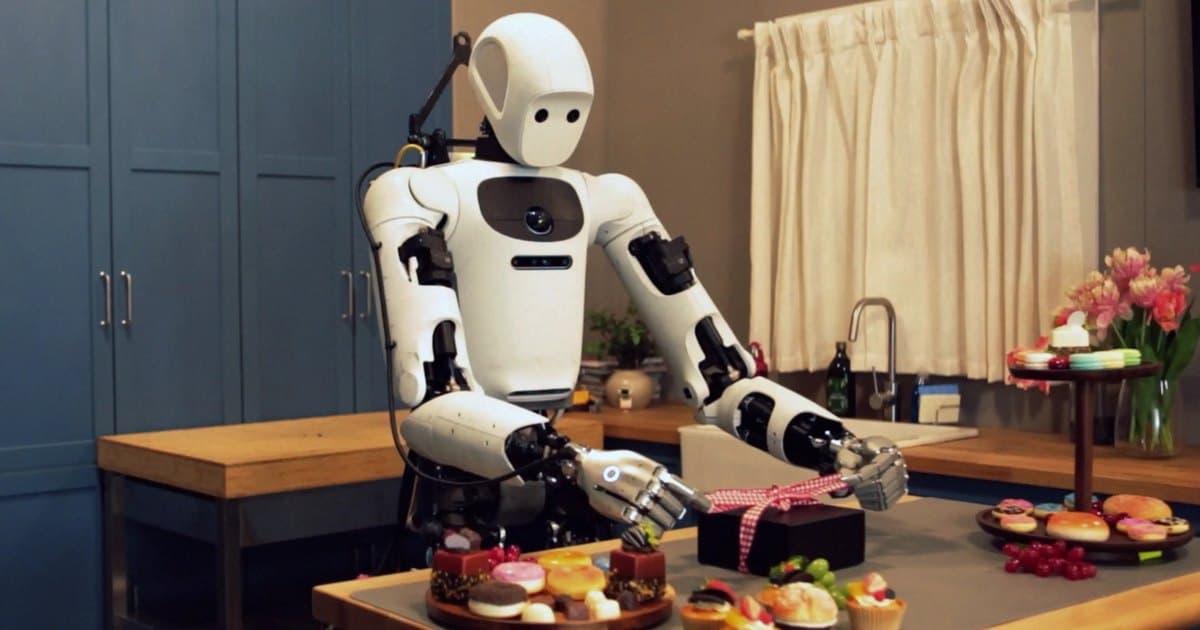
What Google DeepMind released on November 10, 2026
On November 10, 2026, Google DeepMind introduced Gemini Robotics 2.5, which it calls its most capable vision-language-action (VLA) model to date. A VLA model takes in camera images and a plain-language instruction and outputs robot actions directly. DeepMind says version 2.5 widens the range of skills a robot can learn, speeds up how fast it learns them, and improves dexterity, reliability and safety so robots can work in messier, real-world places. It is rolling out to DeepMind's robotics partners; there is no public API or pricing yet. This page is the long-form briefing behind the BSH Technologies Instagram carousel, with every number linked to the primary source.
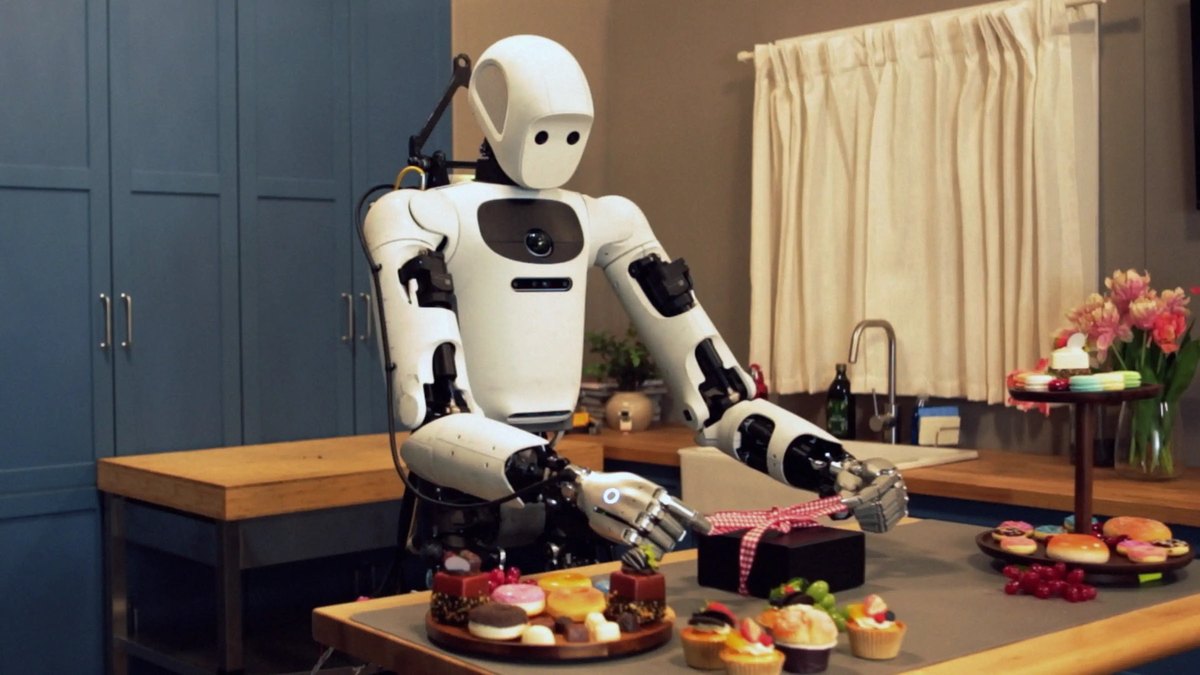
Dexterity: 200 distinct tasks
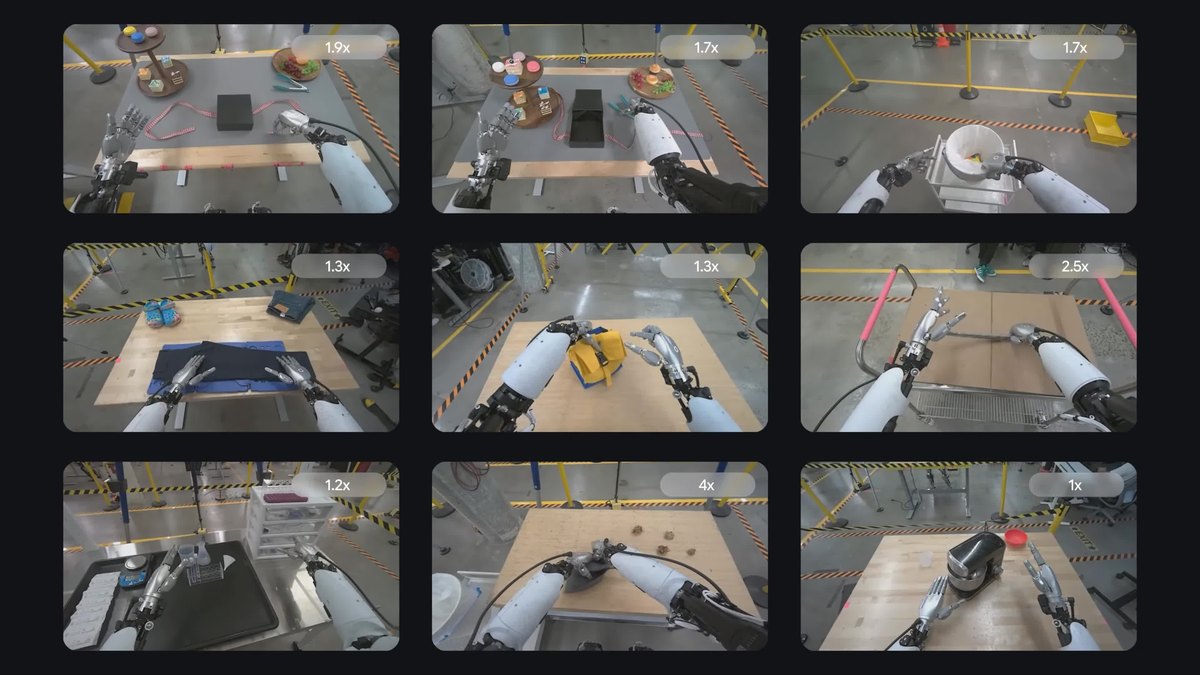
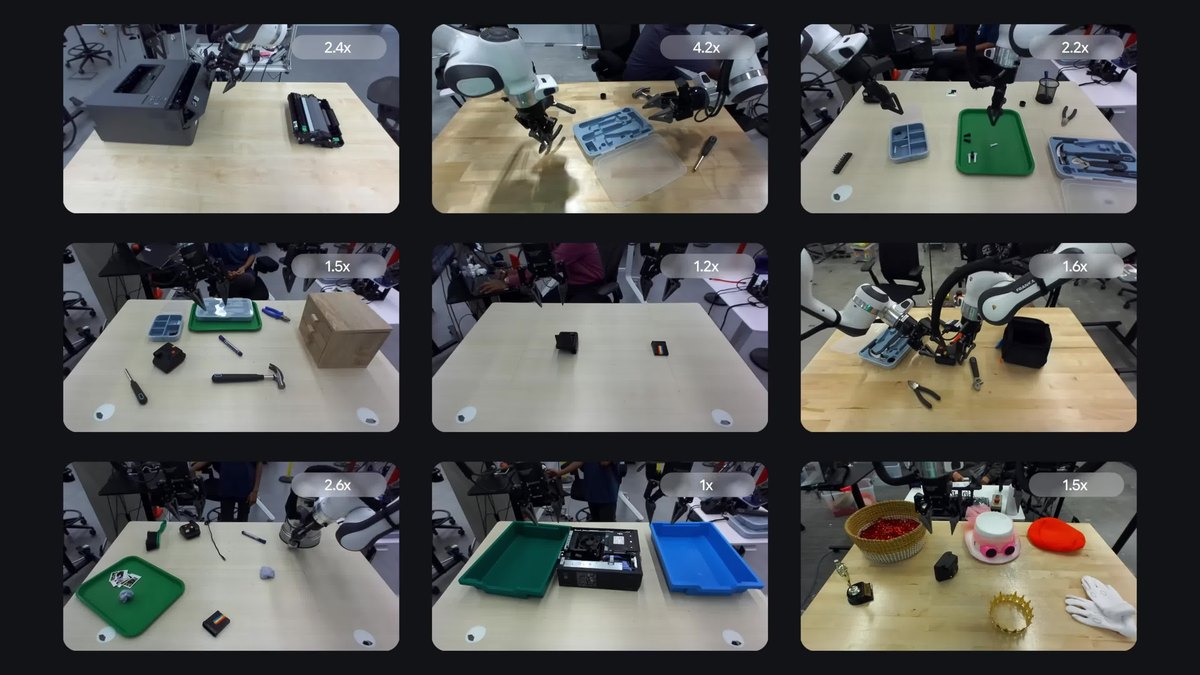
DeepMind evaluated Gemini Robotics 2.5 on more than 200 distinct tasks, such as serving food with tongs, tying a bow on a gift box and pipetting a liquid. These combine advanced tool use, manipulation of deformable objects like ribbon and fabric, and careful handling of delicate items. Like earlier Gemini Robotics models, one model works across different robot bodies, including Apptronik's Apollo 2 humanoid fitted with the five-finger, 22-degree-of-freedom SharpaWave hand, and the Franka Duo platform with two-fingered parallel grippers. The official Gemini Robotics model page covers everything from tabletop arms to full humanoid bodies.
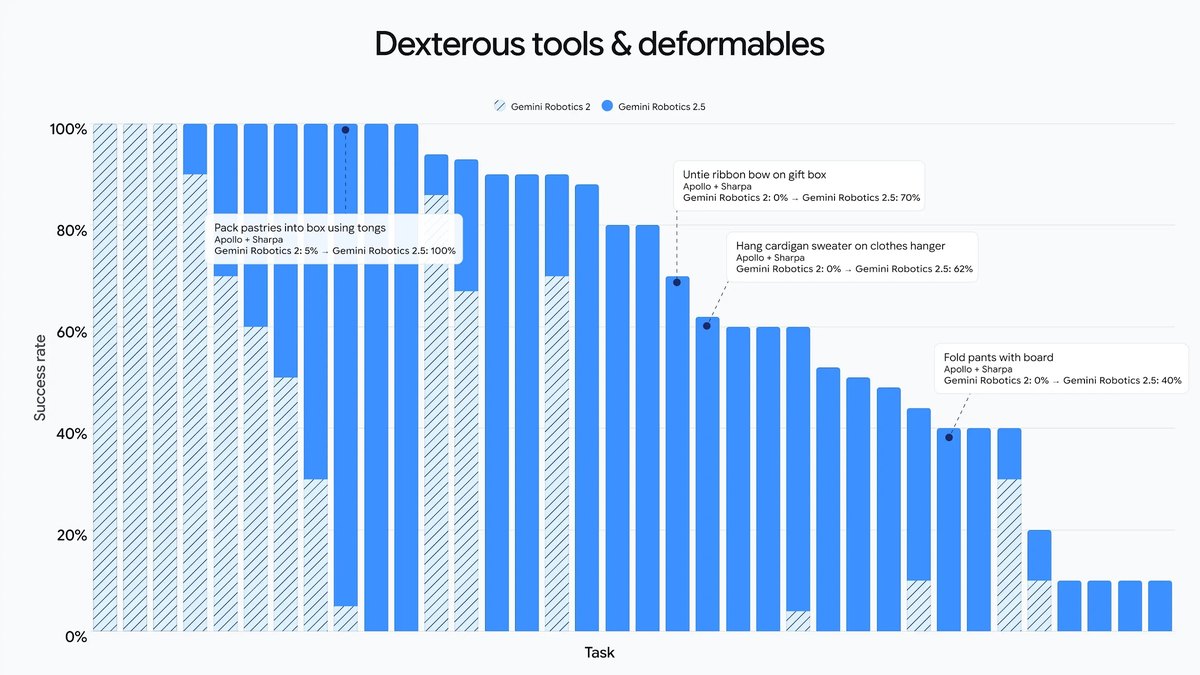
Benchmarks: 30% to 100% higher success, 20% to 30% faster
Compared with its previous baseline, Gemini Robotics 2, DeepMind reports that version 2.5 achieves a 30% to 100% higher success rate depending on the type of task, while completing tasks 20% to 30% faster. The comparison covers four categories on both the Franka Duo and Apollo 2: tabletop pick-and-place, multi-step and contact-rich tasks, precision kitting and insertion, and dexterous tools and deformables. These are DeepMind's own lab evaluations, so treat them as the vendor's numbers until outside groups reproduce them.
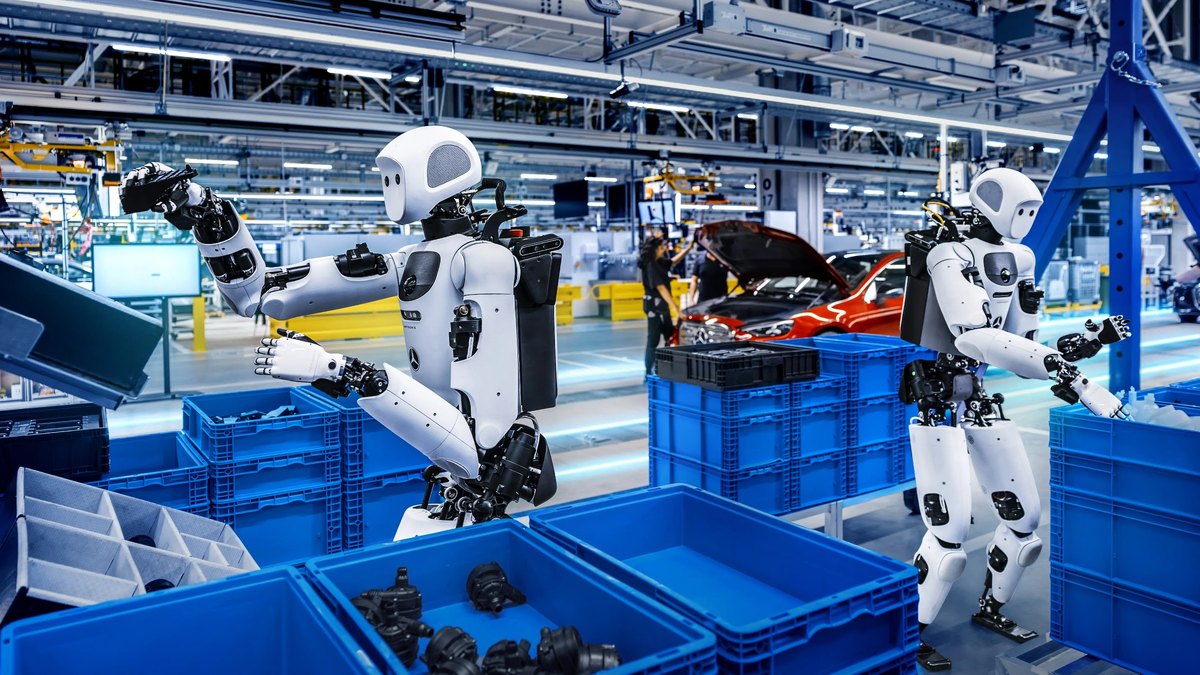
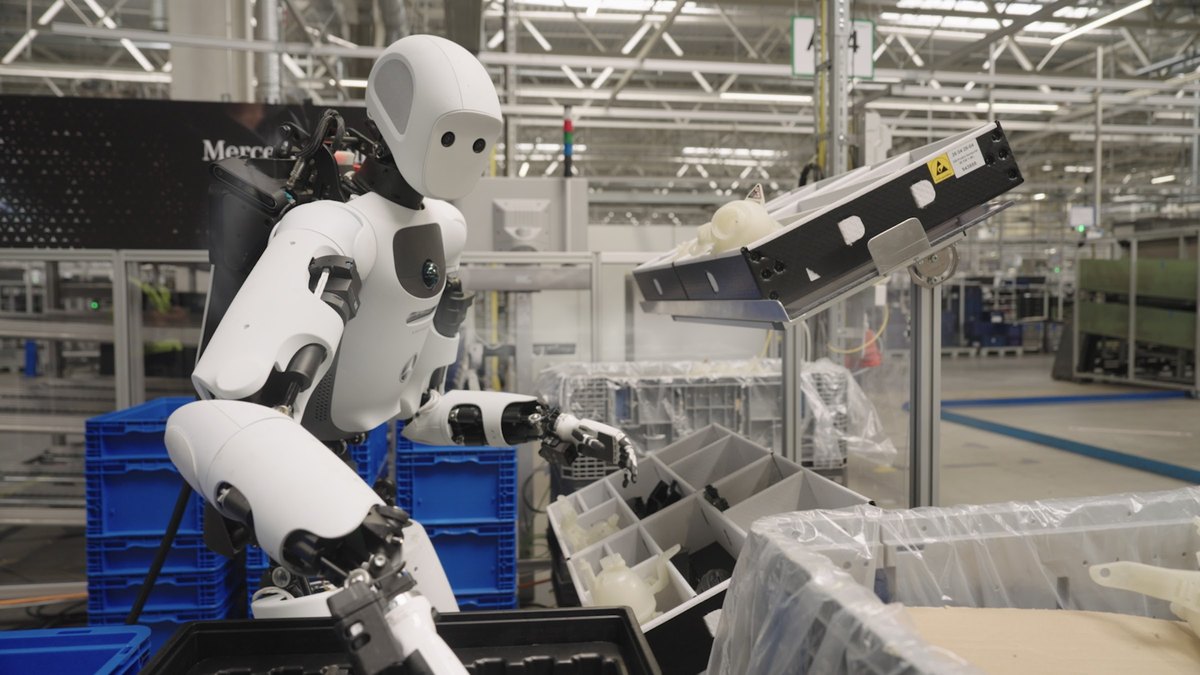
Apollo 2 on Mercedes-Benz production lines: 96% success
The headline real-world test was a proof of concept with Apptronik and Mercedes-Benz on active automotive production lines in Kecskemét, Hungary, and Sindelfingen, Germany. Apollo 2 performed automotive kitting: picking metal brackets out of bulk supply bins and placing them into sequencing containers in the exact order each vehicle on the line needs. The embodied reasoning model, Gemini Robotics ER, kept track of the workflow while Gemini Robotics 2.5 controlled the hands and arms and corrected for gaps. DeepMind reports a 96% success rate.
Apptronik co-founder and CEO Jeff Cardenas said the models "improve[d] dramatically in just a few weeks of post-training and carry over to Mercedes-Benz production with very little drop-off." What DeepMind has not said: how many picks the 96% covers, how long the pilot ran, or how cycle time compared with a human worker, a gap Humanoids Daily also points out. At 96%, roughly one pick in 25 still needs a fix, so expect supervised deployments first.
Safety: human-aware actions and ASIMOV-Jailbreak
Gemini Robotics 2.5 uses inference-time reasoning guidance to steer around physical hazards in real time, which DeepMind compares to the safety classifiers that sit around Gemini's text responses. In its evaluations this raised safe task completion by 33% around obstacles and by 43% around nearby people. For longer, agentic tasks, DeepMind says Gemini 4 Argon leads its robotics safety evaluations on refusing unsafe tasks, resolving uncertainty and working close to humans. It is also releasing ASIMOV-Jailbreak, an open-source benchmark with hundreds of prompts that disguise unsafe requests across dozens of scenes, extending its ASIMOV benchmark work. Argon resists 99.5% of these jailbreaks, up from 82% for the previous baseline, Gemini Robotics ER 2. More detail is in the Gemini 4 safety report.
How Gemini 4 Argon sped up robotics research
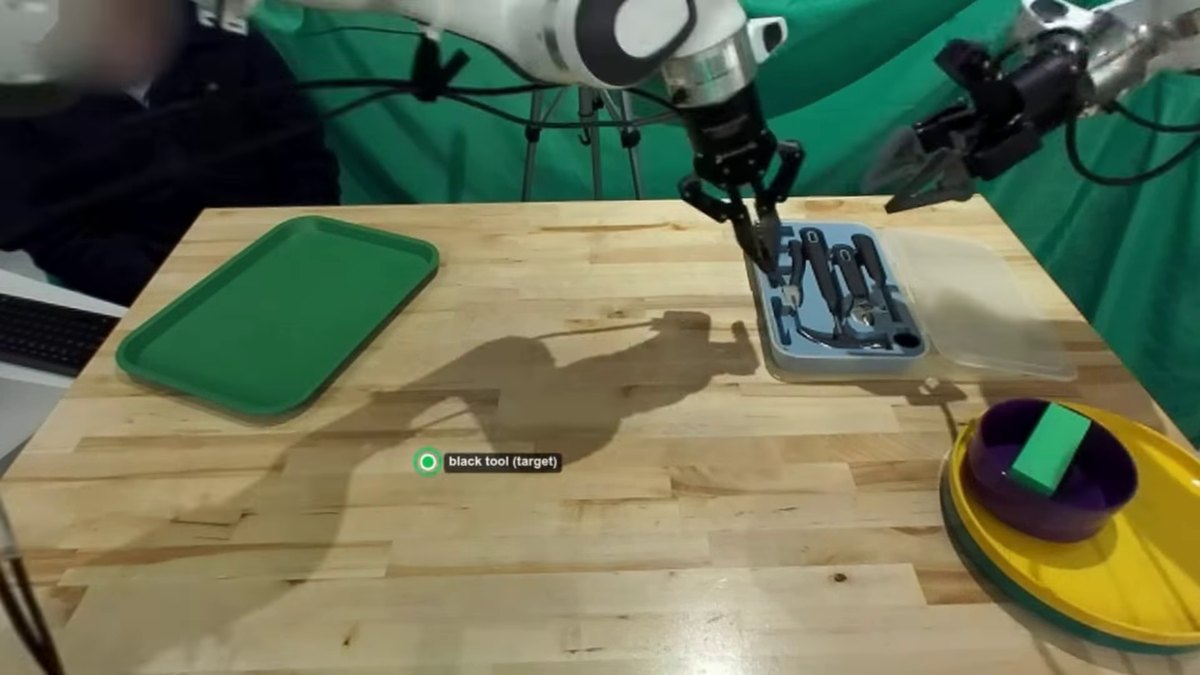
DeepMind credits Gemini 4 Argon's robotics research capabilities for much of the progress. Argon acted as a simulation engine: from one real-world camera scene it can build a realistic digital twin and generate thousands of varied simulated practice runs, which, combined with real demonstrations, help the robot generalise to new scenes and objects. It can also watch video of failed attempts, suggest why they failed, and test fixes in simulation and on real robots. We covered Argon's debut in Gemini 4 Argon and the Fairwind program, and Google's newer frontier model in our Gemini 4 Carbon breakdown.

How it compares with other robot AI news this week
Robotics is now a frontier-lab benchmark, not a side project. A day earlier, Anthropic said its new model more than doubled its RoboDojo simulation score, as covered in our Claude Fable 5.2 and Mythos 5.2 explainer. DeepMind's pitch is different: a dedicated VLA model, tested on real humanoids in a real factory. As The Verge noted, the gains centre on dexterity, the hardest part of general-purpose robots.
What it means, and what is still unknown
For manufacturers, the Mercedes-Benz pilot is the most concrete sign yet that general-purpose humanoids can take on repetitive kitting without task-specific programming. For developers, there is nothing to call yet: Gemini Robotics 2.5 is partners-only, with no API, pricing, or new ER or on-device versions announced. Watch for three things: independent benchmark results, longer factory deployments with throughput numbers, and whether the ASIMOV-Jailbreak scores hold up when outside researchers attack it.
Sources
- Google DeepMind: Gemini Robotics 2.5 accelerates real-world general dexterity (Nov 10, 2026)
- Google DeepMind: Gemini Robotics model page
- Google for Developers: Gemini 4 Argon for Robotics
- Google DeepMind: Gemini 4 safety report
- ASIMOV benchmark
- Apptronik (Apollo humanoid)
- Sharpa (SharpaWave hand)
- Franka Robotics
- The Verge: Google DeepMind's new AI model gives robots improved dexterity
- Humanoids Daily: Gemini Robotics 2.5 puts Apollo 2 on Mercedes-Benz lines
Frequently asked questions
What is Gemini Robotics 2.5?
Gemini Robotics 2.5 is Google DeepMind's most capable vision-language-action model, announced on November 10, 2026. It turns camera input and language instructions into robot actions, with better dexterity, reliability and safety than Gemini Robotics 2.
How much better is Gemini Robotics 2.5 than Gemini Robotics 2?
DeepMind reports a 30% to 100% higher success rate depending on task type, and 20% to 30% faster task completion, across more than 200 tasks.
What did Apollo 2 do at Mercedes-Benz?
In a proof of concept on active lines in Kecskemét, Hungary, and Sindelfingen, Germany, Apptronik's Apollo 2 humanoid used Gemini Robotics 2.5 to sort metal brackets from bulk bins into sequencing trays, with a 96% success rate.
Can developers use Gemini Robotics 2.5?
Not yet. It is rolling out to Google DeepMind's robotics partners; no public API or pricing has been announced.
What is ASIMOV-Jailbreak?
A new open-source benchmark from Google DeepMind with hundreds of prompts that disguise unsafe robot requests across dozens of scenes. Gemini 4 Argon resists 99.5% of them, up from 82% for Gemini Robotics ER 2.
From the blog
View all posts
Claude Fable 5.2 and Mythos 5.2: Anthropic's Faster, Cheaper Frontier Models Explained (Benchmarks, Pricing, What They Built)
On November 9, 2026, Anthropic released Claude Fable 5.2 to everyone and Claude Mythos 5.2 to verified cyber and life-science teams. Same model, two gates: up to 30% faster, 20% cheaper at $8/$40 per million tokens, 49.1% on FrontierCode 2.0, three working electronic devices, Fermat's Last Theorem formalized in 30 hours and RoboDojo robotics up from 27.6% to 64.9%.

Google DeepMind's AI Agents Found Two Weaknesses in Legacy 1024-bit RSA: What Was Measured, What Is Theory, and Why 2048-bit Is Safe
On November 6, 2026, Google DeepMind said human-guided AI agents sharpened two attacks on legacy 1024-bit RSA: a signature-forgery result for padded formats with a 3.5x cheaper 1024-bit reproduction, and a 'fan factory' that cuts batch-factoring cost per extra key about 30x at leading order. Modern 2048-bit RSA is not affected.