Microsoft's 7 New MAI Models at Ignite 2026: Code 2, Cyber 2 Flash, Image 2.7, Realtime 1 and More
At Ignite on November 17, 2026, Microsoft AI launched seven in-house MAI models: Cyber 2 Flash, Code 2, Code 2 Flash, Image 2.7, Realtime 1, Dragon Copilot Transcribe and Decision 1.1. Here is what each one does, how it benchmarks against GPT-6 and Claude, what it costs and where you can use it.
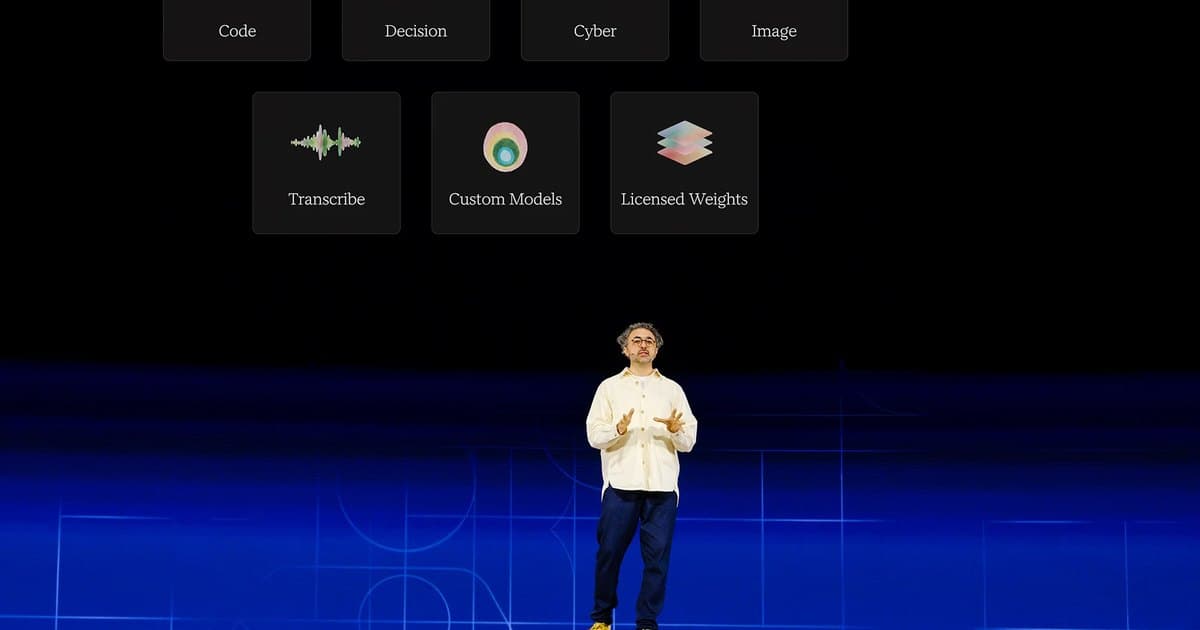
What Microsoft announced at Ignite 2026
On November 17, 2026, at Microsoft Ignite, the Microsoft AI (MAI) team released a family of seven new in-house models built around one pitch: frontier-level quality at a price that lets companies run AI agents around the clock. The lineup covers security, everyday coding, image editing, live voice, medical transcription and model routing. Microsoft also said its second-generation AI chip, Maia 200, is now in production running its largest models with 1.7x more tokens per watt, and it introduced MAI Licensed Weights so enterprises can run a customised MAI model inside their own Azure environment. This page is the long-form briefing behind the BSH Technologies Instagram carousel, with every figure linked to Microsoft's own announcements. It follows our earlier coverage of Microsoft AI's MAI-DxO diagnostic orchestrator.
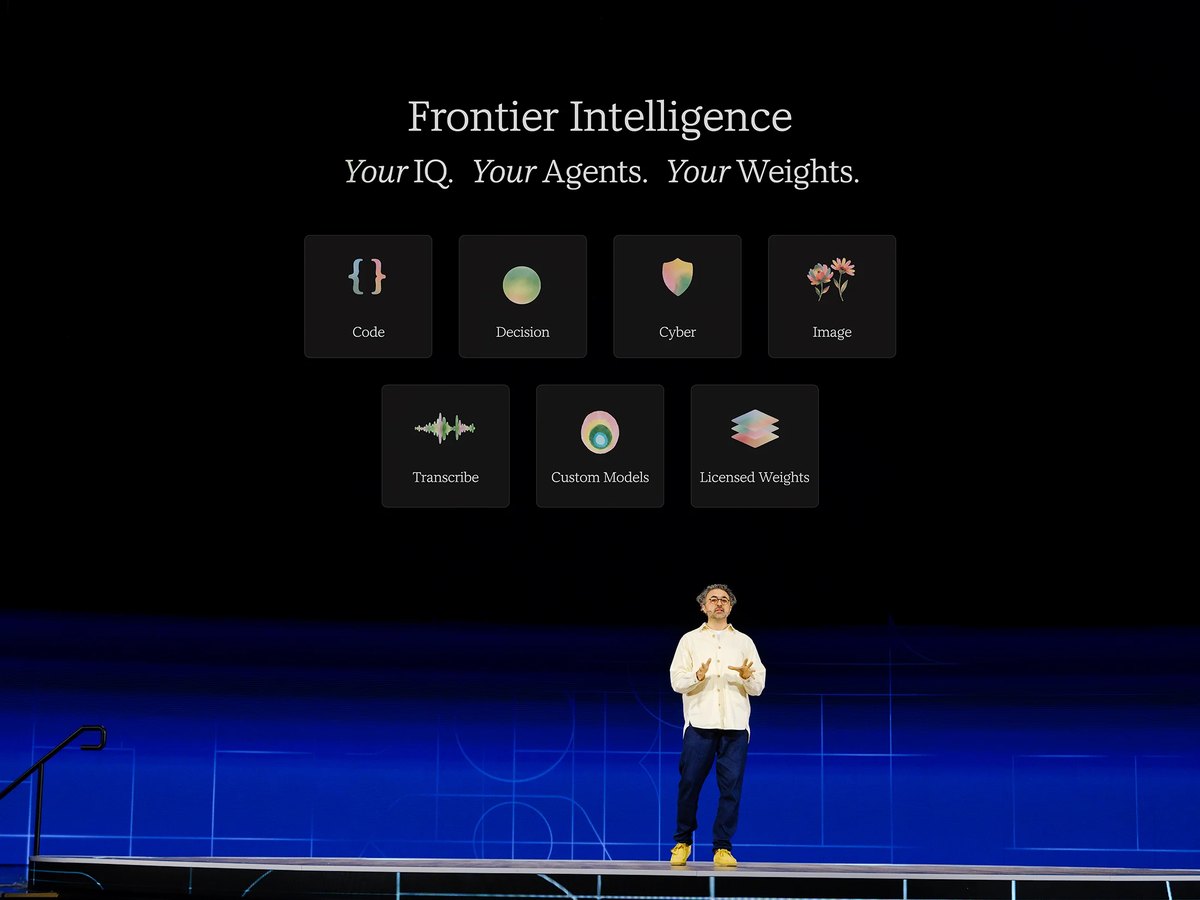
The seven MAI models at a glance
- MAI Cyber 2 Flash: security specialist, 92.3% on CyberGym-E2E vs 91.5% for GPT-6 Astra at less than 2% of the cost per task.
- MAI Code 2: 98% of GPT-6.1 Sol's coding quality at about 40% of the price; 96% of Claude Opus 5.5 at 5% of the price.
- MAI Code 2 Flash: comparable to GPT-6 Luna at 65% and Claude Haiku 5.5 at 20% of the price.
- MAI Image 2.7: #1 on Artificial Analysis image editing, ahead of GPT Image 2.6 Sunburst (max) at one-fifth of the price.
- MAI Realtime 1: Microsoft's first speech-to-speech model, from $0.01 per audio minute.
- Dragon Copilot Transcribe: built on MAI Transcribe 2, 10 million patient encounters a month.
- Decision 1.1: model routing that is 50x faster and 79x cheaper than GPT-6.1 Sol.
1. MAI Cyber 2 Flash: frontier security at under 2% of the cost
According to Microsoft's Cyber 2 Flash announcement, the model scored 92.3% on CyberGym-E2E, a real-world vulnerability-discovery benchmark, versus 91.5% for GPT-6 Astra, using half the reasoning budget and at less than 2% of the cost per task. It also beat GPT-5.6 Cyber on WebExploitBench (40.4% vs 38.4%). List pricing is $0.10 per million input tokens and $0.50 per million output tokens, and the context window grows to 1 million tokens, four times MAI Cyber 1.1 Flash. Microsoft notes it excluded 92 of the benchmark's 905 tasks because they overlapped with its training data. The model is not a public API: it is coming to Microsoft security products, including Codename MDASH, from mid-December. For how rival labs are approaching cyber models, see our breakdown of OpenAI's GPT-6 Cyber.

2. MAI Code 2: 98% of GPT-6.1 Sol at 40% of the price
MAI Code 2 targets everyday enterprise coding rather than research-grade problems. Averaged across DeepSWE 1.1, Terminal Bench 2.1, SWE-Atlas and FrontierCode v1.1, Microsoft says it delivers 98% of GPT-6.1 Sol's performance at about 40% of the cost and 96% of Claude Opus 5.5's performance at 5% of the cost (costs shown at its 50% promotional price). In blind front-end evaluations by 258 annotators, developers preferred its output over GPT-6 Sol 64% of the time. Microsoft is explicit that it is not yet tuned for long-horizon agentic work or fundamental science. MAI Code 2 is available in GitHub Copilot now, with OpenRouter, Vercel, Hermes, OpenCode and Kilo listed as coming soon. Our earlier piece on GPT-6 Sol and Luna pricing gives context for those comparisons.

3. MAI Code 2 Flash: the high-volume coding tier
MAI Code 2 Flash is built for code explanations, targeted edits, routine fixes and rapid iteration. Across DeepSWE 1.1, Terminal Bench 2.1 and SWE-Atlas, Microsoft says it performs comparably to GPT-6 Luna at 65% of the price and Claude Haiku 5.5 at 20% of the price. Microsoft further tuned it into MAI Work Flash, a single model serving Excel, PowerPoint, Word, Teams and FabricIQ. It is in GitHub Copilot and in a limited-access preview in Microsoft Foundry. Compare it with Anthropic's Claude Haiku 5.5 price cut.
4. MAI Image 2.7: #1 in image editing at one-fifth the price
The MAI Image 2.7 announcement says the model took the #1 spot on Artificial Analysis image editing, outperforming GPT Image 2.6 Sunburst (max) at one-fifth of the cost, and ranks fourth for text-to-image generation, making Microsoft the second-best lab there. It costs about $35 per 1,000 images, while MAI Image 2.7 Flash costs about $10 per 1,000. Both are in public preview on Microsoft Foundry, alongside a new Canvas workspace for creating and refining images.

5. MAI Realtime 1: voice agents from $0.01 a minute
MAI Realtime 1 is Microsoft's first live speech-to-speech model. Microsoft says it beats GPT-Realtime 2.1 on quality, speed and price across Big Bench Audio, Tau-Voice and Dynamics 365 Contact Center evaluations. Base usage is $0.01 per audio minute, with reasoning billed separately at $1 and $5 per million input and output tokens. It handles interruptions and background noise, adapts personas through prompting and is compatible with the OpenAI Realtime API. Agoda and Reservations.ai are early testers; you can try it in MAI Labs or join the Foundry limited-access preview.

6. Dragon Copilot Transcribe: 10 million patient visits a month
Per the Ignite announcement, Dragon Copilot Transcribe is built on MAI Transcribe 2, which Microsoft calls the world's fastest and most accurate multilingual transcription model. It now powers 100% of doctor-patient conversation transcriptions in Dragon Copilot, covers 10 million encounters a month, halves error rates in multilingual workflows and is used by about a third of US physicians.

7. Decision 1.1: routing that is 50x faster and 79x cheaper
Decision 1.1 routes each request so that bigger, pricier models are only called when they are really needed. Microsoft says it leads the Artificial Analysis Decision Index ahead of Google and OpenAI, is used by 4,000 customers and is 50x faster and 79x cheaper than GPT-6.1 Sol. Routing models are a fast-growing category; see Google's Gemini Decisions API for a rival approach.
Maia 200 and MAI Licensed Weights
Two more announcements sit underneath the models. Maia 200, Microsoft's second-generation AI accelerator, is in production with 1.7x more tokens per watt. And MAI Licensed Weights lets a company take a frontier MAI model, fine-tune it on its own data and run it in its own Azure tenant; Microsoft cites AT&T's custom 5G analytics model beating GPT-6.1 Sol at 1/50th of the cost.

Why it matters
Microsoft is positioning MAI as the cheaper, controllable layer under Copilot, GitHub and Azure, reducing its reliance on partner models. Every benchmark above is Microsoft's own measurement, and the comparisons depend on configuration, reasoning effort and promotional pricing, as Interesting Engineering also notes. Independent results will matter more than launch charts.
Sources
- Microsoft AI: Seven new world-class models at scalable price-performance (Nov 17, 2026)
- Microsoft AI: MAI Cyber 2 Flash
- Microsoft AI: MAI Code 2 and Code 2 Flash
- Microsoft AI: MAI Image 2.7
- Microsoft AI: MAI Realtime 1
- Microsoft AI: Ignite 2026 MAI keynote transcript
- Microsoft AI: MAI Licensed Weights
- Interesting Engineering: Microsoft takes on Claude with coding models costing 95% less
Frequently asked questions
What models did Microsoft announce at Ignite 2026?
Seven MAI models on November 17, 2026: MAI Cyber 2 Flash, MAI Code 2, MAI Code 2 Flash, MAI Image 2.7, MAI Realtime 1, Dragon Copilot Transcribe (built on MAI Transcribe 2) and Decision 1.1.
How good is MAI Code 2?
Microsoft says it reaches 98% of GPT-6.1 Sol's coding performance at about 40% of the price, and 96% of Claude Opus 5.5 at 5% of the price, across four everyday enterprise coding benchmarks.
Where can I use MAI Code 2?
MAI Code 2 and Code 2 Flash are available in GitHub Copilot. Code 2 Flash is also in limited-access preview in Microsoft Foundry, with OpenRouter, Vercel, Hermes, OpenCode and Kilo listed as coming soon.
How much does MAI Image 2.7 cost?
About $35 per 1,000 images, and about $10 per 1,000 for MAI Image 2.7 Flash, in public preview on Microsoft Foundry.
How much does MAI Realtime 1 cost?
Base speech-to-speech usage starts at $0.01 per audio minute, with reasoning billed separately at $1 per million input tokens and $5 per million output tokens.
From the blog
View all posts
Anthropic's Nasdaq Debut Explained: ANT Pops 34%, Closes at $97.17 After the Biggest IPO on Record
On November 19, 2026, Anthropic began trading on the Nasdaq as ANT after raising $81.3 billion at $83 a share, the largest IPO in history. The stock opened at $111.50, closed at $97.17 (up 17%) with a fully diluted value of about $1.8 trillion, and out-traded SpaceX's debut by volume.

Gemini 4 Neon Explained: Google's #3-Ranked Model at $3 per Million Tokens, Benchmarks and /swarm Demos
On November 18, 2026, Google released Gemini 4 Neon, a fast frontier-level Gemini 4 model that sits between Carbon and Hydrogen. It scores 61 on the Artificial Analysis Intelligence Index (#3 overall), ranks #1 on the AA Coding Agent Index, costs $3/$15 per million tokens with a 1M context, and ships with Neon for cyber for trusted defenders.