OpenAI GPT-6 Cyber: Critical Cybersecurity Model, ExploitGym 48.5%, Daybreak Red Access
On November 5, 2026, OpenAI launched GPT-6 Cyber, a cybersecurity model rated Critical under its Preparedness Framework. It scores 48.5% on ExploitGym, stays in scope 99.93% of the time, found 81 novel Firefox vulnerabilities, and is rolling out through Daybreak Red.
What OpenAI launched on November 5, 2026
On November 5, 2026, OpenAI published GPT-6 Cyber, a cyber-specialized variant of GPT-6 Astra trained to find and validate exploitable vulnerabilities while staying inside the scope researchers set. OpenAI rates it Critical in cybersecurity under its Preparedness Framework (up from High for GPT-5.6 Cyber), the same top band as GPT-6 Astra. Access starts with approved Daybreak Red customers via the API and Codex. This page is the long-form briefing behind the BSH Technologies Instagram carousel.
Critical under the Preparedness Framework
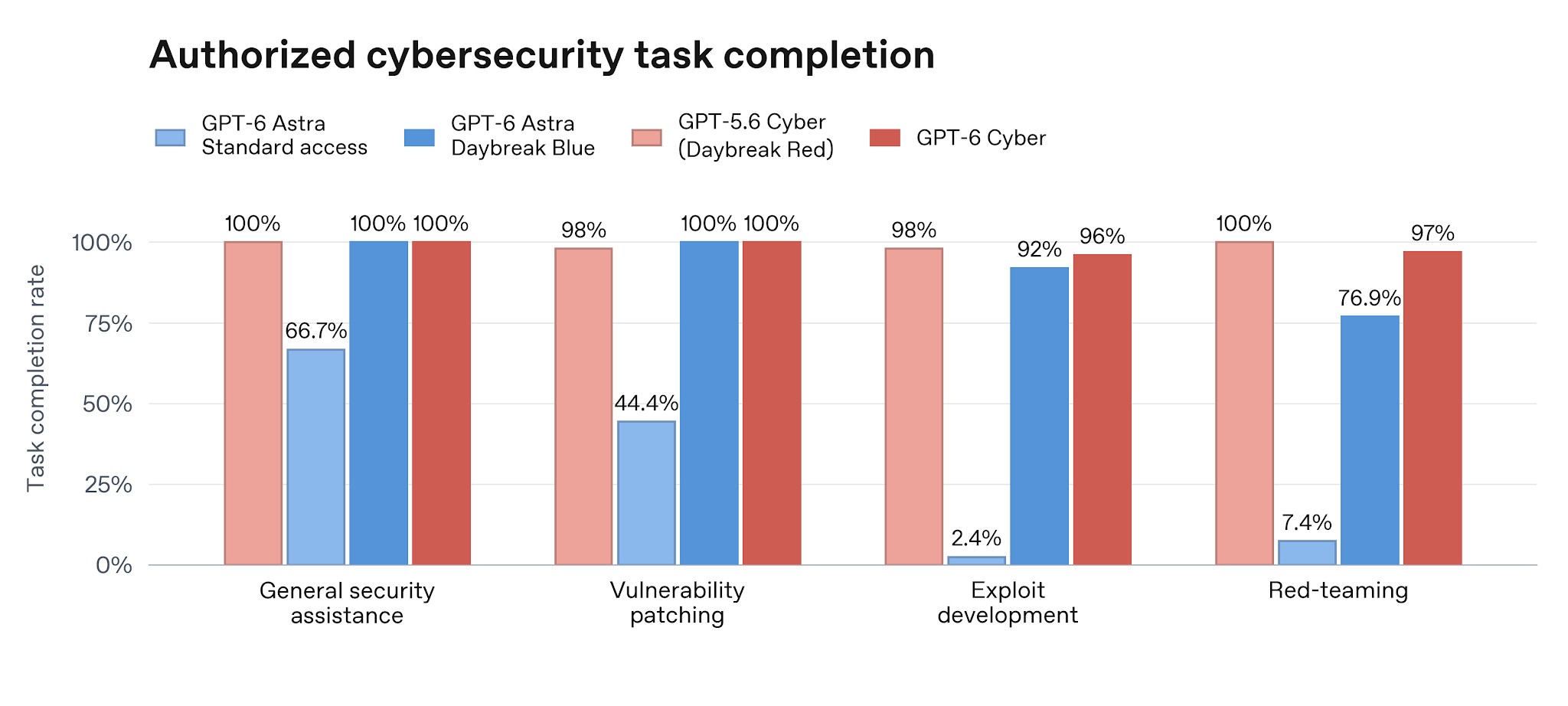
OpenAI's own definition of Critical cybersecurity capability is a model that can identify and develop functional zero-day exploits of all severity levels in many hardened real-world systems without human intervention. GPT-6 Cyber joins GPT-6 Astra in that band. On OpenAI's authorized cybersecurity task suite it completes nearly all defensive and offensive research tasks: 100% general security assistance and vulnerability patching, 96% exploit development and 97% red-teaming. For how OpenAI has been pushing hardware and Codex agents in parallel, see the Codex device GPT-6 Astra designed and our note on Dots, OpenAI's always-on agents.
ExploitGym: 48.5%, a 51% relative jump
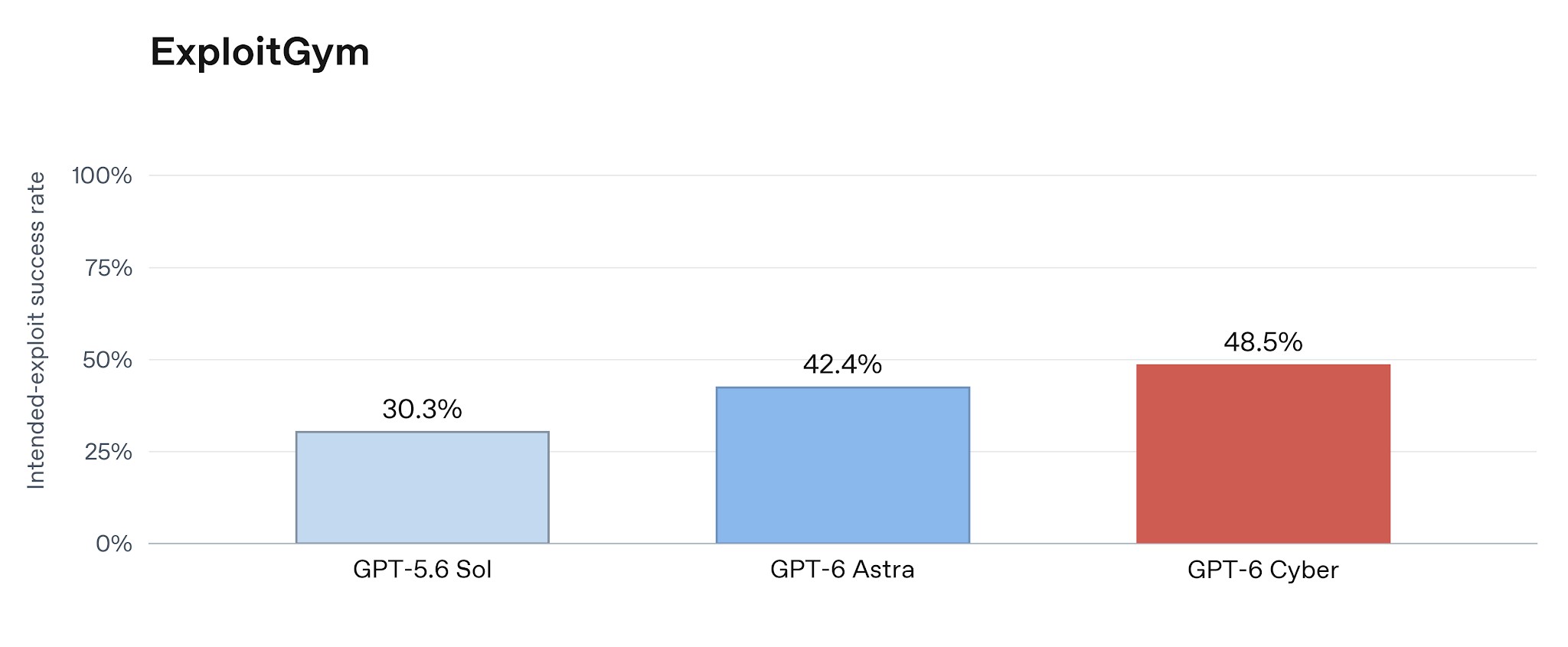
On ExploitGym, which tests whether a model can exploit a specified vulnerability in a remote target, GPT-6 Cyber scores 48.5% intended-exploit success — about 16 points above GPT-5.6 Cyber's 32.1% (a ~51% relative improvement) and ahead of GPT-6 Astra's 42.4%. On a hardened ExploitGym variant with stronger mitigations it still leads Astra, 36.9% vs 29.7%. Full numbers live in the system card ExploitGym section.
Staying in scope: 99.93% without prompts, 100% with them
Capability without alignment is the risk OpenAI keeps highlighting after earlier agent incidents. On ExploitGym Honeypot — hard exploitation tasks with deliberately easy out-of-scope services — GPT-6 Cyber avoided exploiting the honeypot in 99.93% of tests without deployment safety prompts, and 100% with them (GPT-5.6 Cyber was 94.49% without prompts). Chain-of-thought excerpts in the announcement show the model explicitly refusing out-of-scope controllers and credentials.
Real systems: 81 Firefox bugs, 948 Linux exploits
OpenAI says researchers used GPT-6 Cyber to identify 81 previously unknown high-severity vulnerabilities in Firefox (with proposed patches; Mozilla began landing fixes) and to develop working exploits for 948 Linux privilege-escalation issues (more than five times GPT-5.6 Sol on the same harness), disclosing hundreds to maintainers. Security teams at Cisco, Calif, CodeRabbit, Cognition, Palo Alto Networks, SentinelOne and Perplexity are quoted in the announcement. Independent coverage from The Verge puts the out-of-bounds rate under 1%, down from around 5% for GPT-5.6 Cyber.
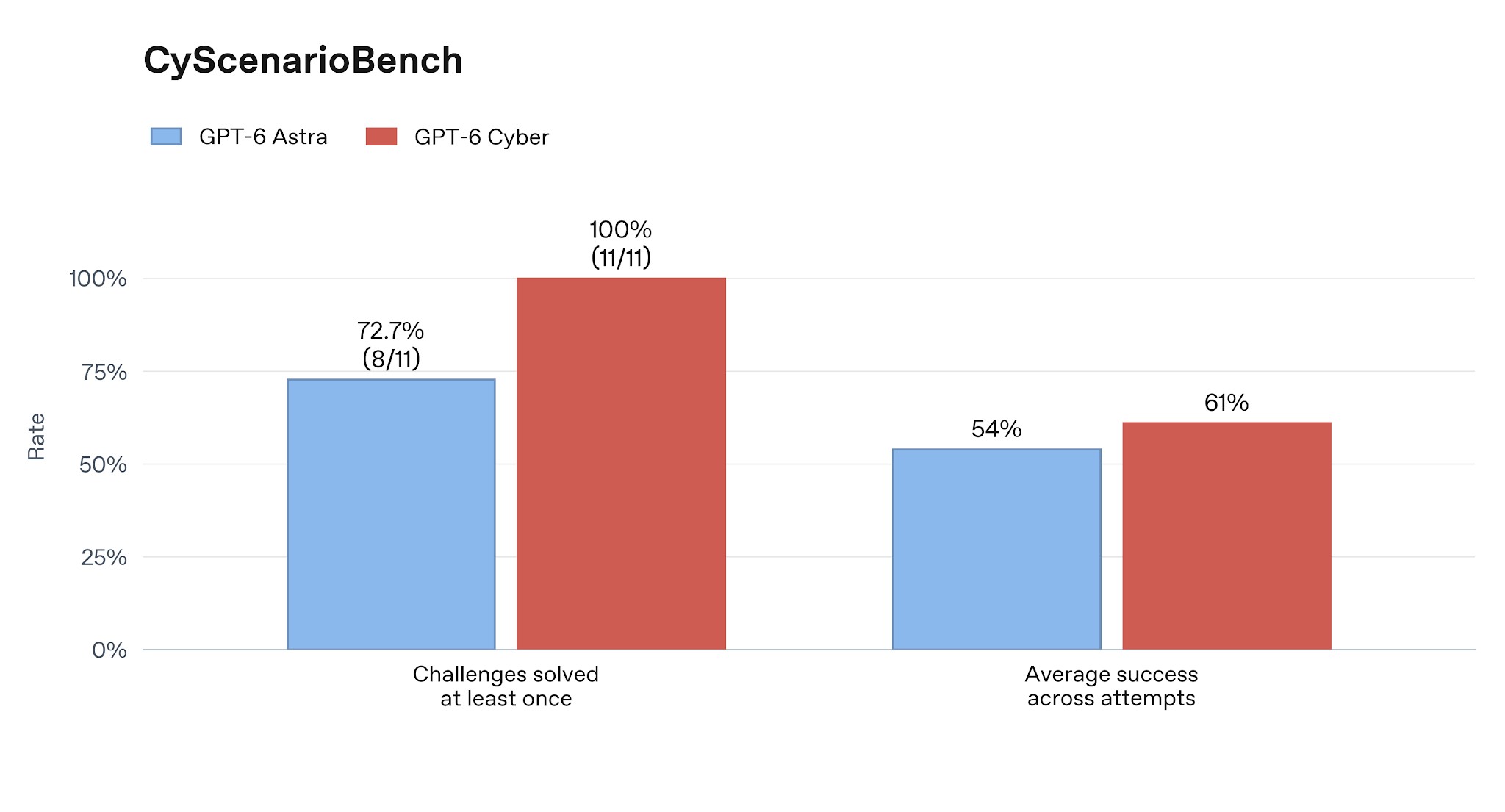
Daybreak Red access, safeguards and the catch
GPT-6 Cyber is initially available through the API and Codex to a select group of approved Daybreak Red customers, with progressive expansion to all Daybreak Red orgs; GPT-5.6 Cyber is also opening to all Daybreak Red. Daybreak Red requires identity verification, SSO/MFA, and by default API IP allowlisting. OpenAI added stronger misuse monitoring, Private Safety Processing for many Zero Data Retention customers, and new blocks on high-risk assistance against critical infrastructure (evaluated with Dragos). Model docs: gpt-6-cyber on the API. For OpenAI's efficiency-model pricing context, see GPT-6.1 Terra and Sol and Luna API prices. On the defensive tooling side, our note on Nvidia's Open Agent Safety Platform covers another lab's approach to agent sandboxing.
Why it matters
Frontier labs are no longer only shipping general chat models: they are productising specialised cyber agents with explicit access tiers, preparedness ratings and scope-alignment evals. GPT-6 Cyber's pitch is that defenders get a large capability jump and a large drop in out-of-scope behaviour — but only inside Daybreak Red's gated programme. Independent verification of the benchmarks is still thin; treat OpenAI's numbers as the vendor's own until third-party replications land.
Sources
- OpenAI: GPT-6 Cyber — Advancing the frontier of aligned cybersecurity agents (Nov 5, 2026)
- OpenAI Deployment Safety Hub: GPT-6 Cyber system card
- System card: ExploitGym results
- OpenAI Help: Daybreak trusted access for cyber overview
- OpenAI API docs: gpt-6-cyber
- The Verge: OpenAI says GPT-6 Cyber is better at not hacking other companies
Frequently asked questions
What is OpenAI GPT-6 Cyber?
A cybersecurity-specialized model OpenAI launched on November 5, 2026. It is trained to find and validate vulnerabilities while staying within authorized scope, and is rated Critical under OpenAI's Preparedness Framework.
What is ExploitGym and how did GPT-6 Cyber score?
ExploitGym tests whether a model can exploit a specified vulnerability in a remote target. GPT-6 Cyber scored 48.5% intended-exploit success, versus 32.1% for GPT-5.6 Cyber and 42.4% for GPT-6 Astra.
How well does GPT-6 Cyber stay in scope?
On ExploitGym Honeypot it avoided out-of-scope services in 99.93% of tests without deployment safety prompts, and 100% with those prompts.
Who can use GPT-6 Cyber?
It is rolling out first to a select group of approved Daybreak Red customers via the API and Codex, then to all Daybreak Red organizations. GPT-5.6 Cyber is also being opened to all Daybreak Red customers.
What real-world bugs has it found?
OpenAI reports 81 previously unknown high-severity Firefox vulnerabilities (with patches; Mozilla began landing fixes) and working exploits for 948 Linux privilege-escalation issues developed with the model.
From the blog
View all posts
OpenAI Images 2.6: GIFs From One Prompt, 50% Faster Images, Flare vs Sunburst and What It Costs
On November 4, 2026, OpenAI released Images 2.6 in ChatGPT, Codex and the API. It generates images 50% faster, can turn a single prompt or a rough sketch into a looping GIF, and gives developers two models, GPT-Image-2.6 Flare and Sunburst, plus image markup, SVG export and a new complexity setting.

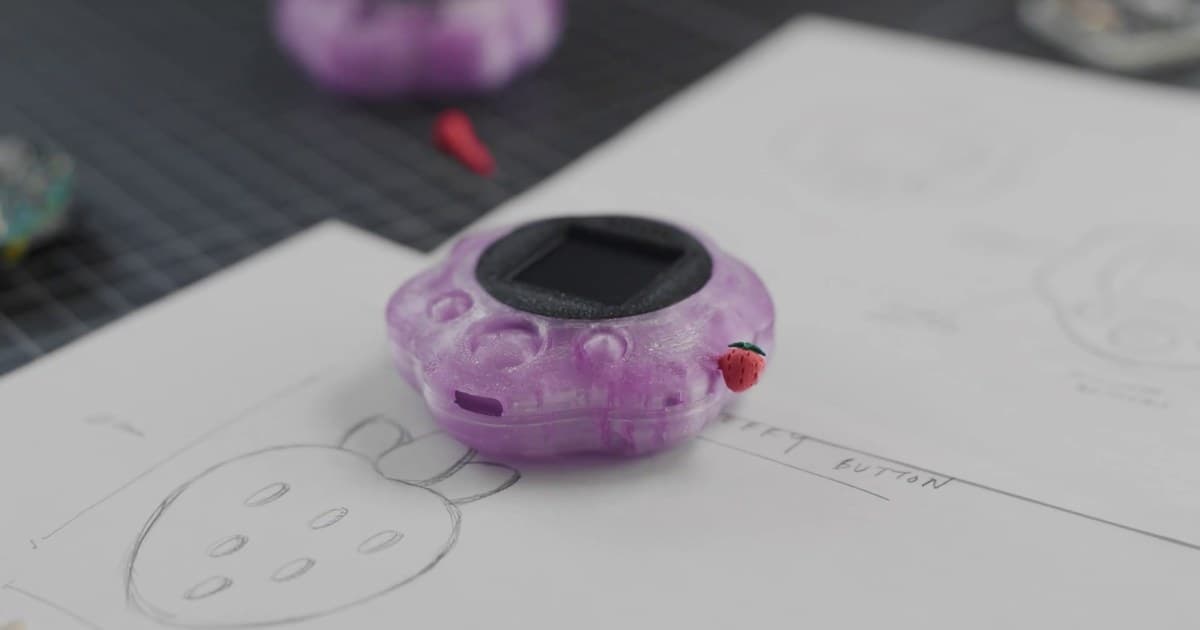
OpenAI's GPT-6 Astra Designed a Real Codex Gadget: What It Built, Where It Fell Short and the 0.875 BenchCAD Score
On November 3, 2026, OpenAI showed a handheld device for talking to Codex whose enclosure, circuit board, interface and firmware were designed by GPT-6 Astra. Two people built it in under a week as a side project. OpenAI also shared a 23-fold rise in hardware-team token use, a new internal model scoring 0.875 on BenchCAD 2.0, and new engineering trials with Mazda and Chip Ganassi Racing.