OpenAI's GPT-6.1 Terra: Half the Price, Built for Computer Use, and the Catch
On October 26, 2026, OpenAI launched GPT-6.1 Terra, a fast, efficient model for computer use, visual reasoning and writing. It costs $1 per million input tokens and $5 per million output tokens, 50% less than GPT-5.6 Terra and GPT-6.1 Sol, scores 15 points higher than GPT-5.6 Terra on Agents' Last Exam and runs over 3x faster than GPT-6 Astra and GPT-6.1 Sol. Here is what it does, what it costs, the benchmarks and the catch.
What OpenAI launched
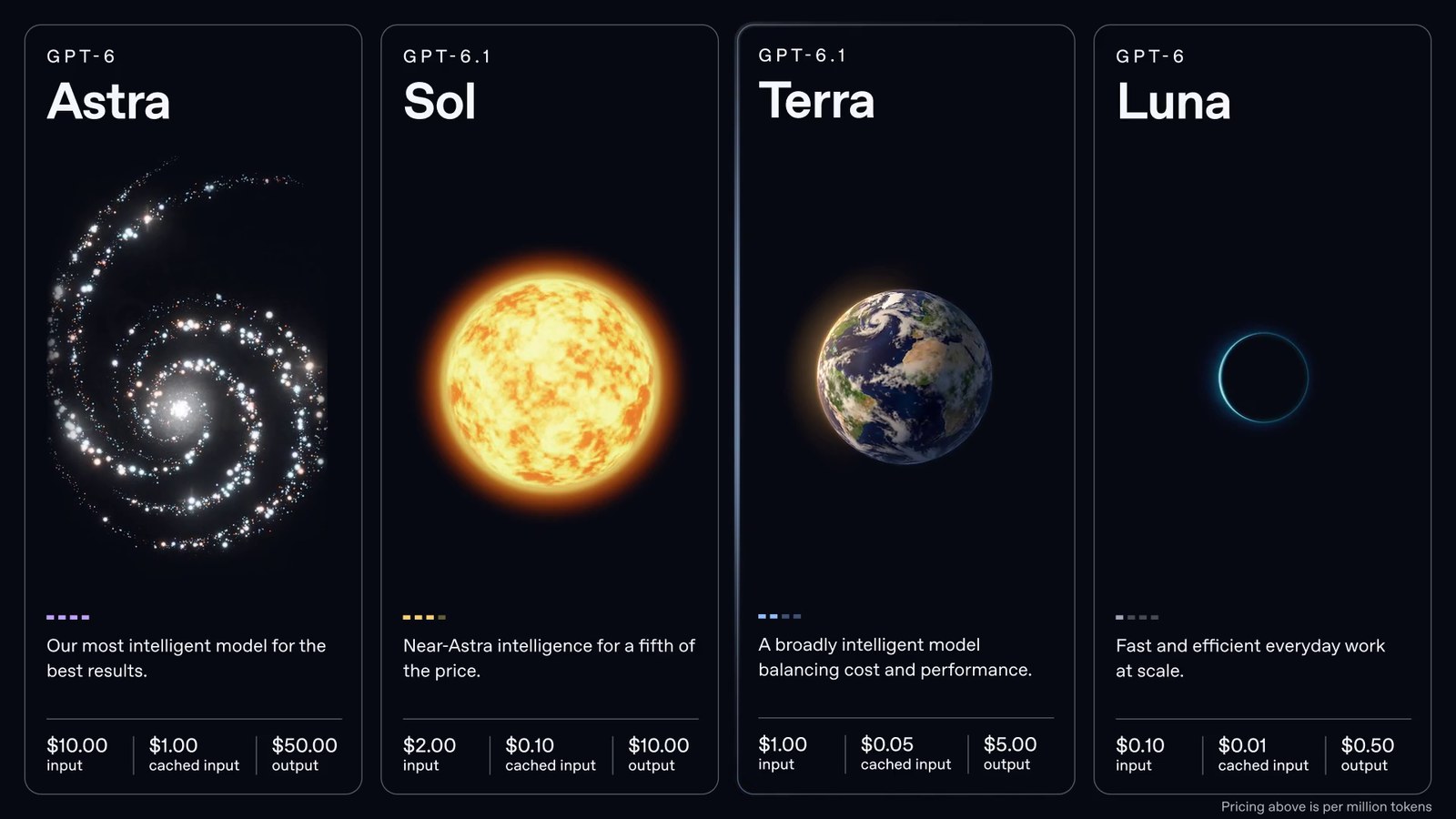
On October 26, 2026, OpenAI introduced GPT-6.1 Terra, which it describes as "a fast, efficient model that combines detailed visual reasoning and precise computer use alongside clearer, more natural writing." It replaces GPT-5.6 Terra as the mid-size model in OpenAI's four-model family, which runs from GPT-6 Astra (the most capable) through GPT-6.1 Sol and Terra down to GPT-6 Luna. OpenAI pitches it at everyday office work: drafting proposals, reading technical drawings, filling out forms and editing videos. This page is the long-form briefing behind the BSH Technologies Instagram carousel; more explainers like it are on the BSH Technologies AI blog.
- Where it runs: ChatGPT Work and Codex for all Plus, Pro, Enterprise and Edu users, and the OpenAI API as
gpt-6.1-terra. AWS also made it generally available on Amazon Bedrock the same day. - What it is for: computer use (operating desktop apps and websites), visual reasoning over screenshots, drawings and charts, and writing.
- Who should care: teams automating high-volume work. OpenAI's own example is reading incoming invoices and typing their details into accounting software.
GPT-6.1 Terra pricing: half the old price
Standard API pricing is $1 per million input tokens, $0.05 per million cached input tokens and $5 per million output tokens. OpenAI says that is 50% lower than both GPT-5.6 Terra and GPT-6.1 Sol. In ChatGPT Work and Codex the same plan allowance covers more tasks than with GPT-5.6 Terra, and substantially more than with GPT-6.1 Sol or GPT-6 Astra. For the rest of the family's prices, see our breakdown of OpenAI's GPT-6 Sol and Luna API pricing.
Computer use: "sees it, does it"
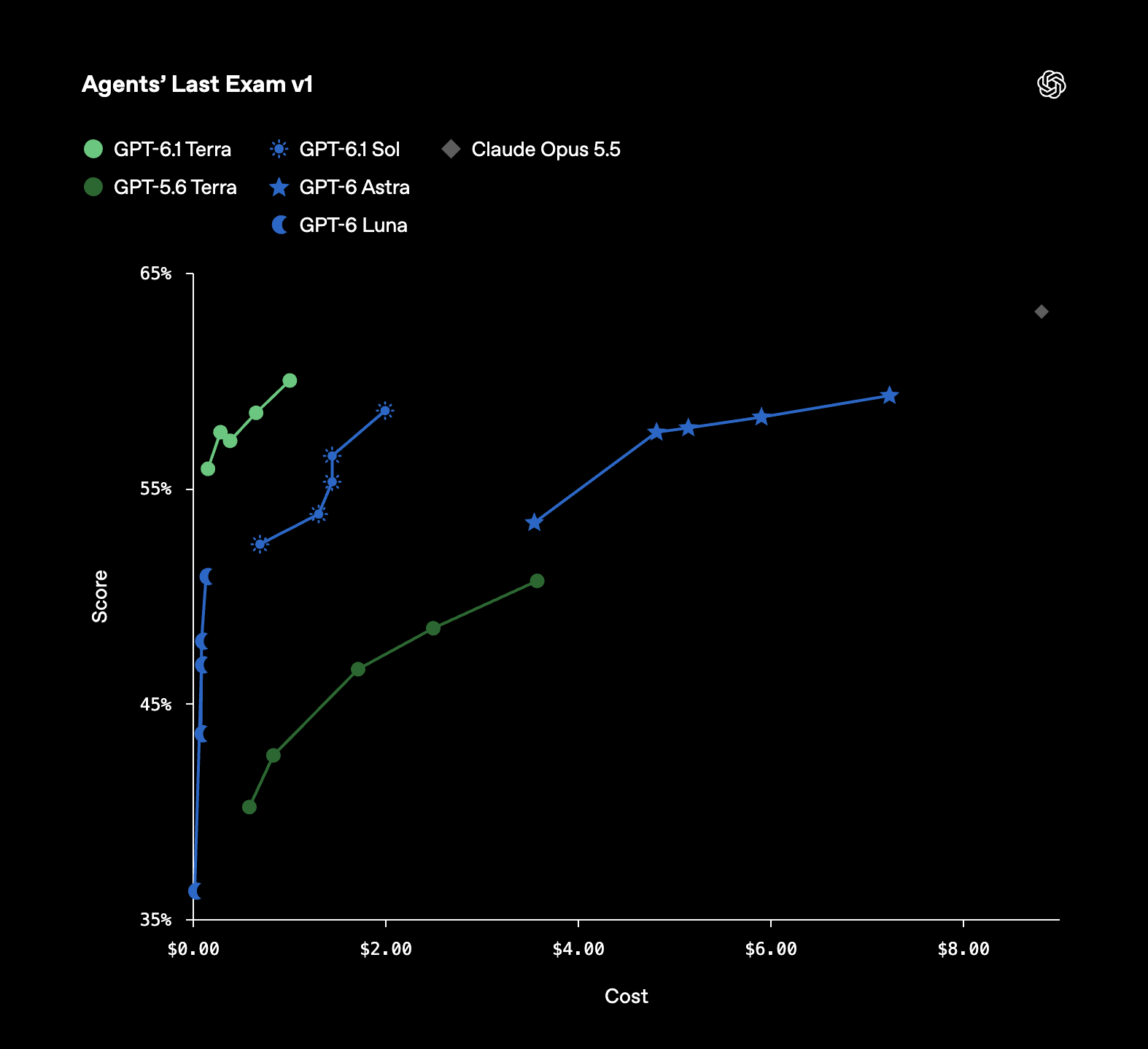
OpenAI measured computer use on Agents' Last Exam, a benchmark of professional tasks such as turning architectural drawings into a 3D model, or reviewing an animated film shot by shot to write a time-coded log for a restoration team. According to OpenAI:
- At medium reasoning effort, GPT-6.1 Terra scores 15 percentage points higher than GPT-5.6 Terra at about one-third of the cost, and performs on par with GPT-6 Astra at one-tenth of its price per token.
- At max effort it is over three times as token-efficient as Claude Opus 5.5 at a quarter of its price per token, which OpenAI puts at a ~9x lower cost per task.
- It completes tasks over three times faster than both GPT-6 Astra and GPT-6.1 Sol.
- On OSWorld 2.1, which tests multistep desktop-app tasks, Terra at medium effort beats GPT-5.6 Terra's best score at a fraction of the cost per task.
- On MMMU-Pro (visual reasoning) it beats GPT-5.6 Terra at every reasoning setting and nearly matches GPT-6 Astra and GPT-6.1 Sol.
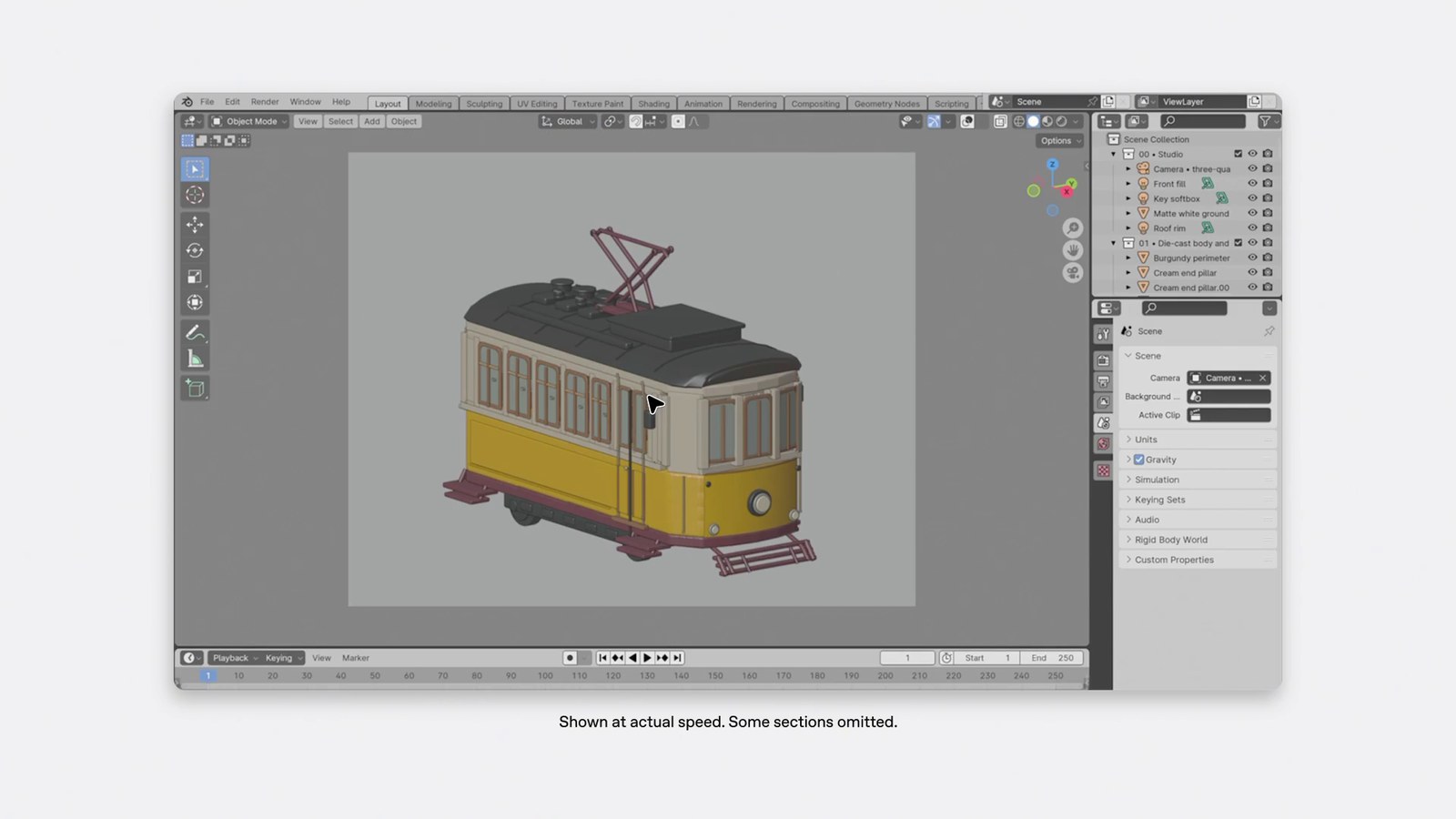
In the launch video OpenAI shows Terra looking at photos of a Lisbon tram and then building a 3D model of it in Blender, operating the app itself. That kind of always-on, app-driving agent is where OpenAI has been heading since its always-on Dots agents from DevDay.
Fewer factual errors and better coding
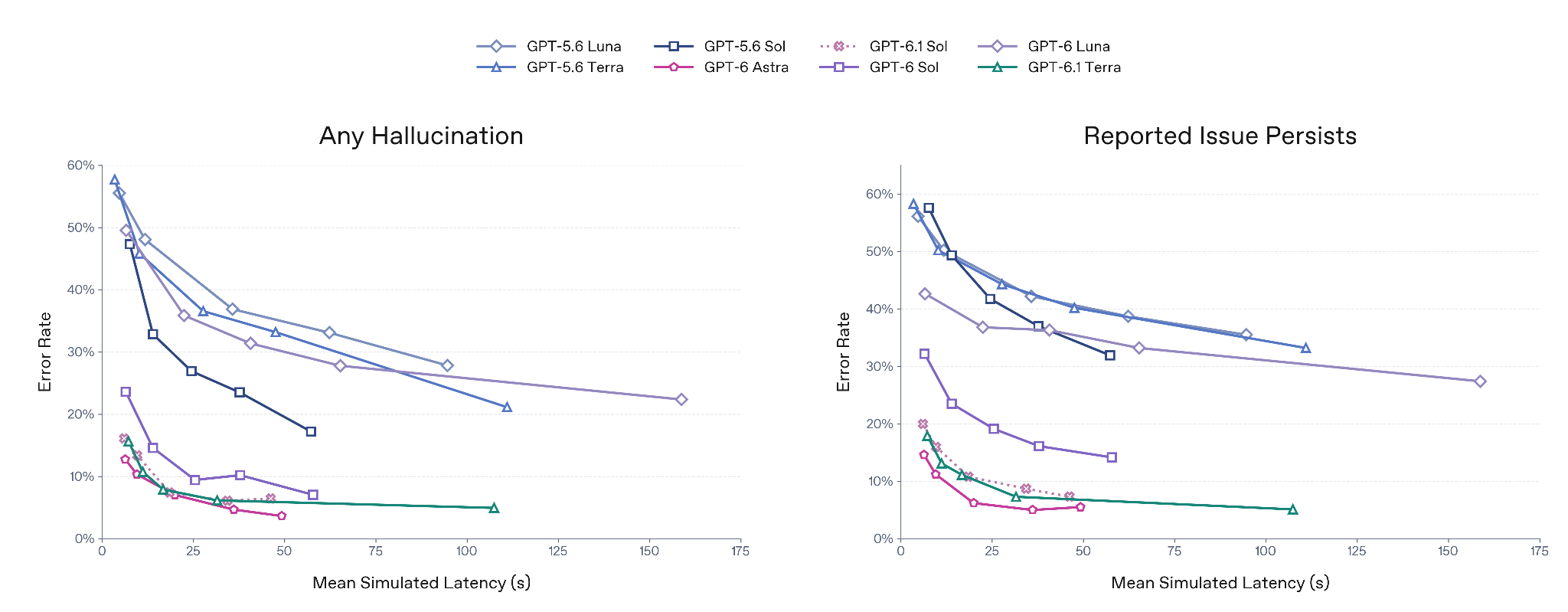
OpenAI says it has "invested heavily" in cutting hallucinations this year. On its internal benchmark of error-inducing prompts, the error rate at low reasoning effort fell from 53.6% with GPT-5.6 Terra to 16.7% with GPT-6.1 Terra, a drop of nearly 37 points. At maximum effort it fell 18 points to 4.3%, close to GPT-6 Astra and GPT-6.1 Sol. The GPT-6.1 Terra system card adds a separate test on conversations users had flagged for hallucinations, where Terra performs on par with GPT-6.1 Sol and far better than GPT-6 Sol.
Coding benchmarks
- Terminal-Bench 4.0 (command-line coding tasks): at max effort Terra solves 50.3%, more than double GPT-5.6 Terra's published 21.5%. For comparison, Moonshot reported 65.7% for its open-weight Kimi K3.1 Pro on the same benchmark name, though setups differ.
- Terminal-Bench-Science 0.1 (code for research tasks): at max effort Terra beats GPT-6.1 Sol at lower cost and comes within five points of Claude Opus 5.5 at less than a fifth of the estimated cost.
The catch
- Not for the hardest coding: OpenAI itself says that for the most complex coding tasks, GPT-6.1 Sol and GPT-6 Astra remain the better choice. Harnesses built around top models, like Microsoft's 1,024-agent Agensh running GPT-6.1-sol, are still aimed at those bigger models.
- Critical cybersecurity rating: under its Preparedness Framework, OpenAI treats Terra as Critical in cybersecurity and High in biological and chemical capability, so it ships with the same safeguards stack as GPT-6.1 Sol and GPT-6 Astra. Critical means a model that could, for example, find and build working zero-day exploits in hardened real-world systems without human help.
- All numbers are OpenAI's own: every benchmark here comes from OpenAI's launch post and system card. Agents' Last Exam and the error-inducing prompt set are not independently reproduced yet, so wait for third-party tests before switching workloads.
Should you switch?
If you run high-volume agent work, such as form filling, invoice entry, screenshot QA or document drafting, Terra is the obvious model to test first: half the price of GPT-5.6 Terra with large gains on computer use and factuality. Keep GPT-6.1 Sol or GPT-6 Astra for long, complex coding, and benchmark on your own tasks before moving production traffic.
Sources
Frequently asked questions
What is GPT-6.1 Terra?
GPT-6.1 Terra is a fast, efficient OpenAI model launched on October 26, 2026 for computer use, visual reasoning and writing. It replaces GPT-5.6 Terra as the mid-size model in OpenAI's family, between GPT-6.1 Sol and GPT-6 Luna.
How much does GPT-6.1 Terra cost?
Standard API pricing is $1 per million input tokens, $0.05 per million cached input tokens and $5 per million output tokens, which OpenAI says is 50% lower than GPT-5.6 Terra and GPT-6.1 Sol.
Where can I use GPT-6.1 Terra?
It is available to Plus, Pro, Enterprise and Edu users in ChatGPT Work and Codex, in the OpenAI API as gpt-6.1-terra, and on Amazon Bedrock.
How good is GPT-6.1 Terra at computer use?
On Agents' Last Exam at medium effort it scores 15 percentage points higher than GPT-5.6 Terra at about one-third the cost and performs on par with GPT-6 Astra at one-tenth its price per token. It also runs over three times faster than GPT-6 Astra and GPT-6.1 Sol, according to OpenAI.
What are the limitations of GPT-6.1 Terra?
OpenAI says GPT-6.1 Sol and GPT-6 Astra remain better for the most complex coding tasks. Terra is treated as Critical in cybersecurity and High in biological and chemical capability under OpenAI's Preparedness Framework, and all published benchmark results are OpenAI's own.
From the blog
View all posts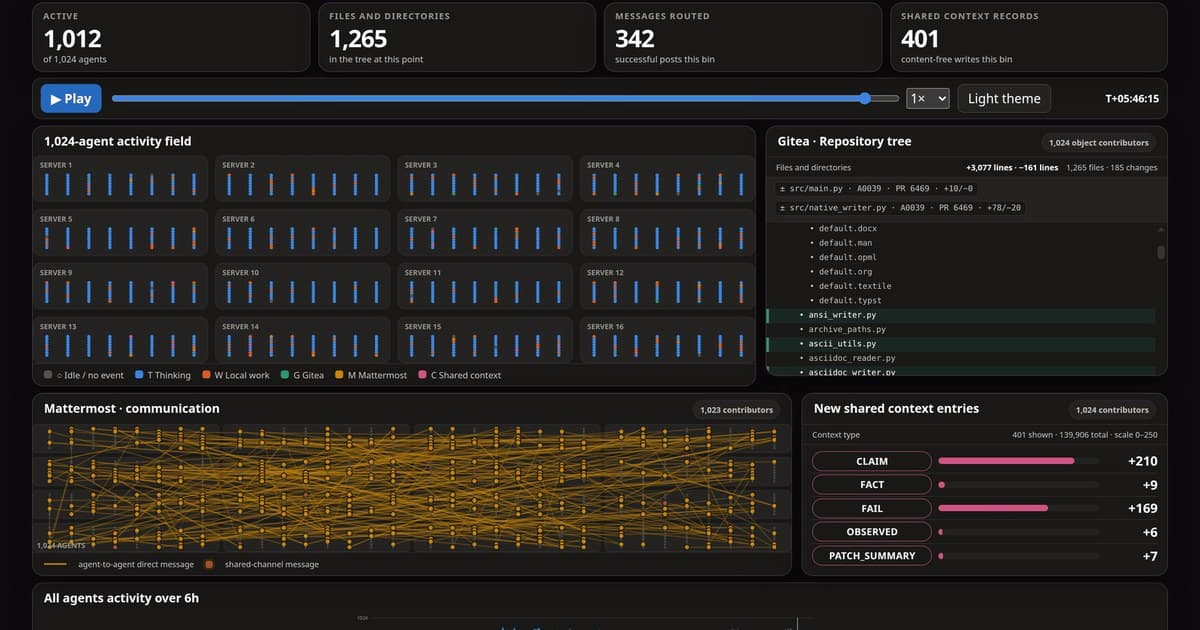
Microsoft's Agensh: 1,024 AI Agents With No Boss Rebuild Real Software, What It Scored, and the Catch
On October 24, 2026, Microsoft Research open-sourced Agensh, a multi-agent harness in which up to 1,024 AI coding agents organise themselves with no central orchestrator. On the hardest ProgramBench tasks the mean pass rate rose from 19.31% with one agent to 28.78% with 128, and Pandoc reached 55.06% with 1,024 agents. Here is how it works, what emerged, and the catch.


Moonshot AI's Kimi K3.1 Pro: a 3T-Class Open-Weight Model Close to Claude Opus 5.5, What It Costs, and the Catch
On October 23, 2026, Moonshot AI launched Kimi K3.1 Pro, a 2.8T-parameter model it calls its most capable 3T-class open-weight model. It scores 65.7% on Terminal-Bench 4.0, just behind Claude Opus 5.5, ranks 4th on the Artificial Analysis Intelligence Index and costs $2/$10 per million tokens. Here are the coding, 3D and finance results, the price, and the catch: weights are not out yet and Moonshot deliberately cut its cyber skills.