Claude Ship: Anthropic's AI Agents That Review, Fix and Approve Your Pull Requests
On November 23, 2026, Anthropic launched Claude Ship, a set of GitHub agents that take a pull request through code review, fixes and an approval decision. Code Review is generally available; PR Steward and Claude Approvals are in beta, and a new /ship command brings it to Claude Code. Here is how each agent works, what it costs and the risks to plan for.

What Anthropic launched
On November 23, 2026, Anthropic introduced Claude Ship, a set of agents that handle everything after you open a GitHub pull request: reviewing it, fixing what the review finds and deciding whether it is ready to merge under rules your team writes. Anthropic's pitch is that most code on its own Claude Code team is now written by Claude, so the slow part has moved to review, fixes and sign-off. The goal, in its words: “ship code as fast as teams write it.” This page is the long-form briefing behind the BSH Technologies Instagram carousel, with every claim linked to a primary source.
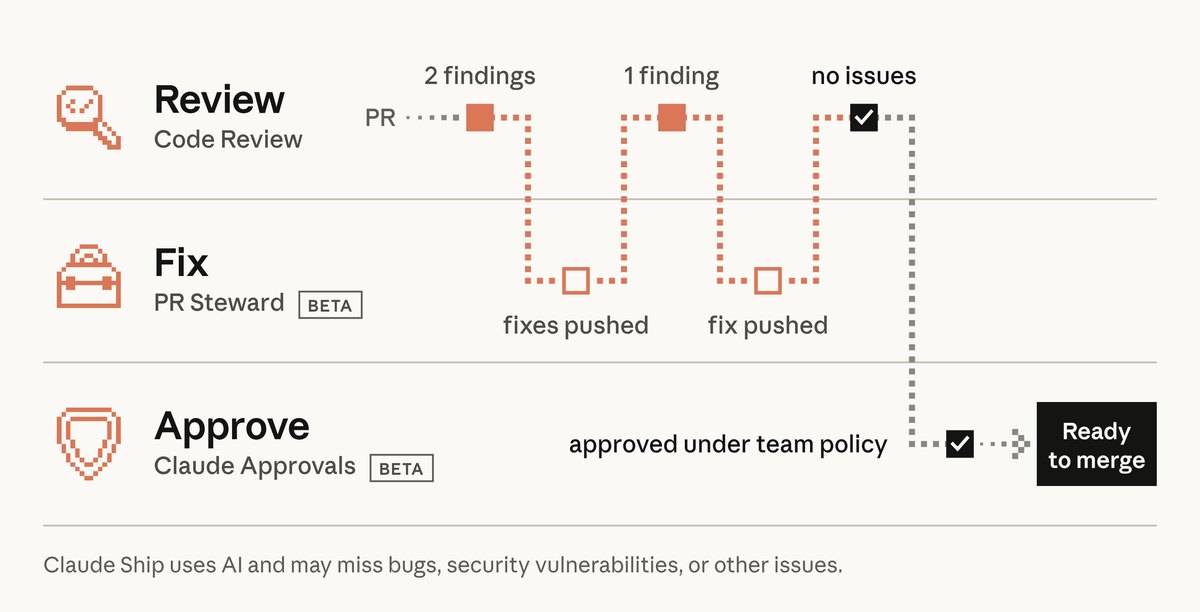
Claude Ship has three parts, described in the Claude Ship documentation:
- Code Review (generally available) finds problems such as logic errors, security vulnerabilities and broken edge cases.
- PR Steward (beta) works on failing checks, merge conflicts and review feedback, and pushes fixes.
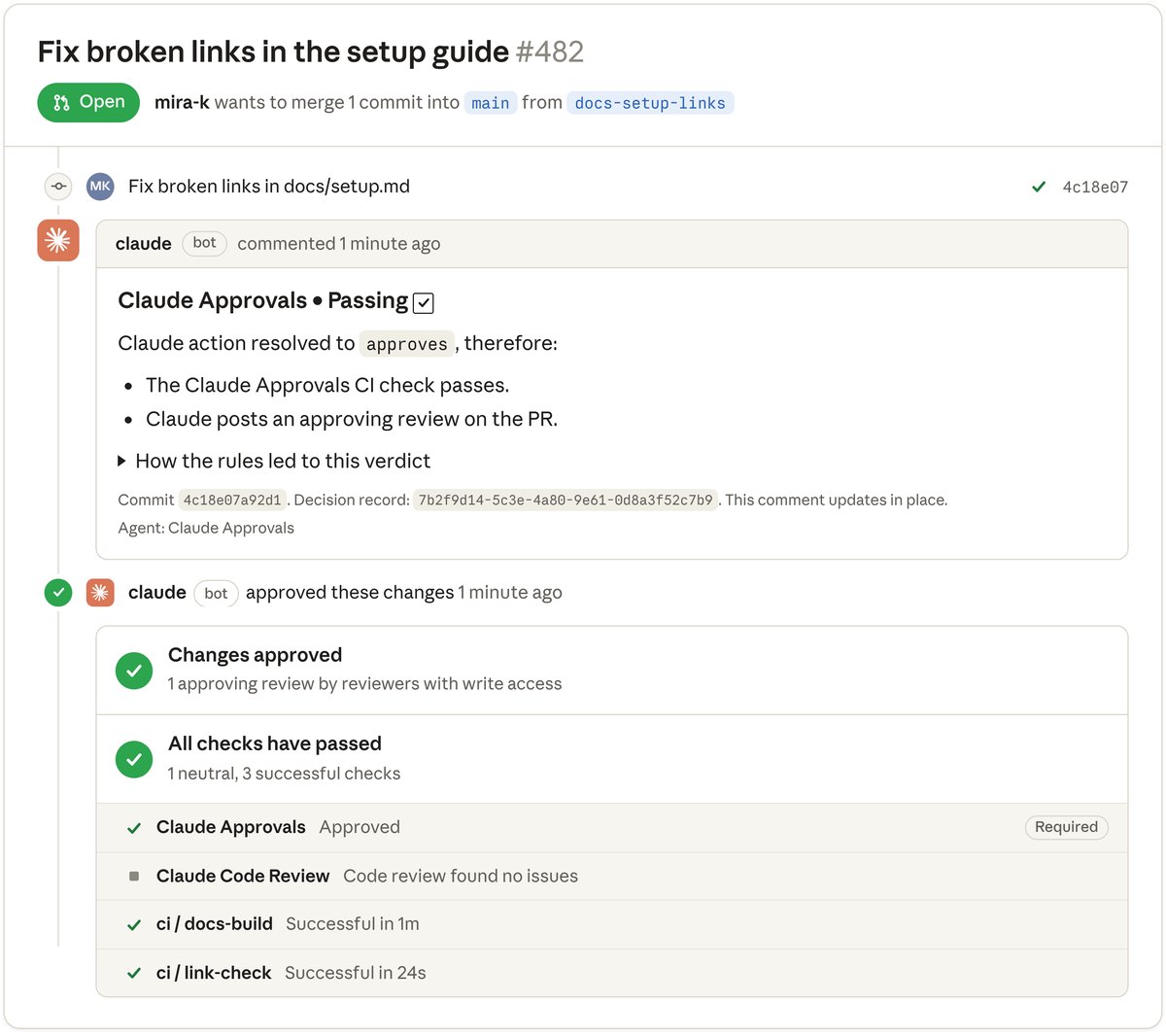
- Claude Approvals (beta) checks each pull request against an approval policy you write, and can approve routine changes if the policy allows it.
Code Review: findings that are checked before they post
Code Review reads a change alongside the surrounding code “through multiple lenses”. It collects findings, adversarially verifies them, categorises them and posts them as inline comments on the exact lines, ranked by severity. Admins choose a Quick, Standard or Deep review level per repository and decide when reviews run.
Anthropic's own numbers come from the Claude Code team, where Claude's review is one layer of a broader process: from June to September, merged pull requests more than doubled while the share of reverted PRs fell by more than 40%. That kind of volume is why Anthropic also replaced git internally; see our piece on Anthropic's Scion version control system.
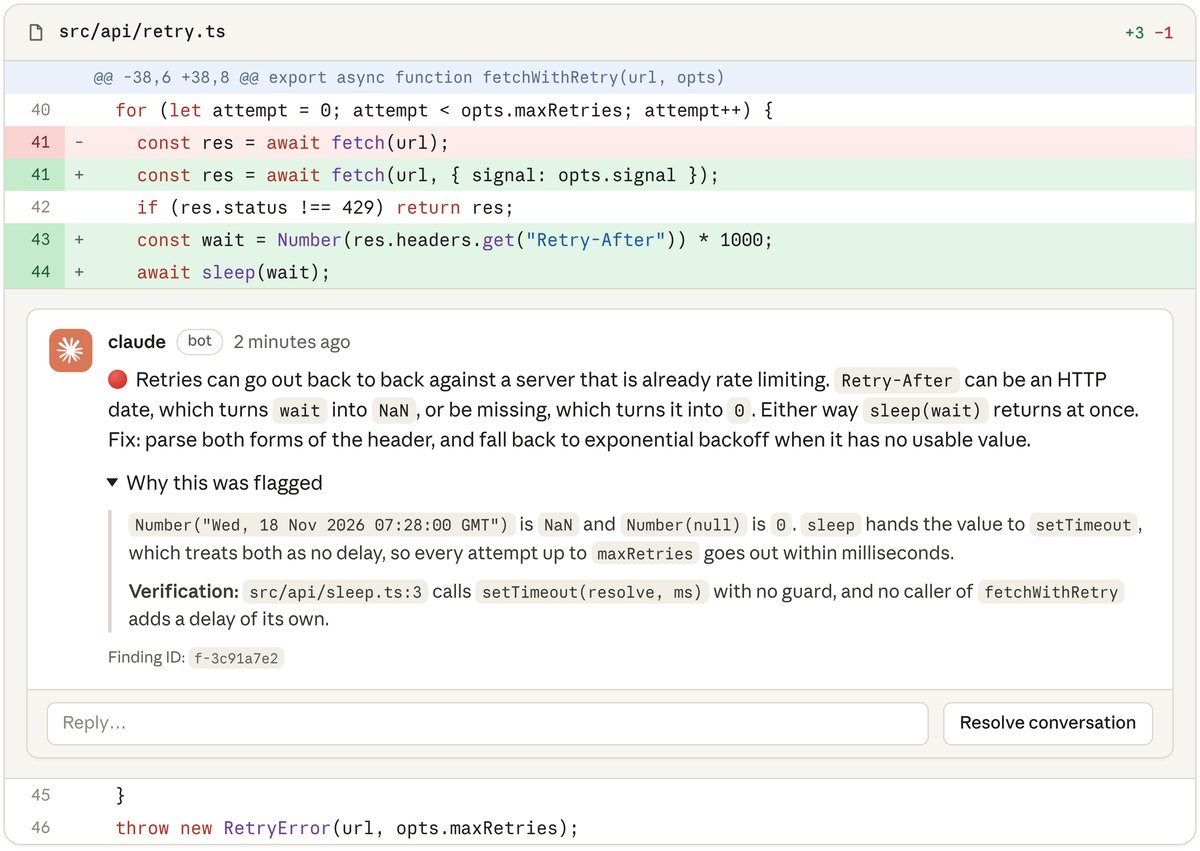
PR Steward: an agent that keeps the PR green
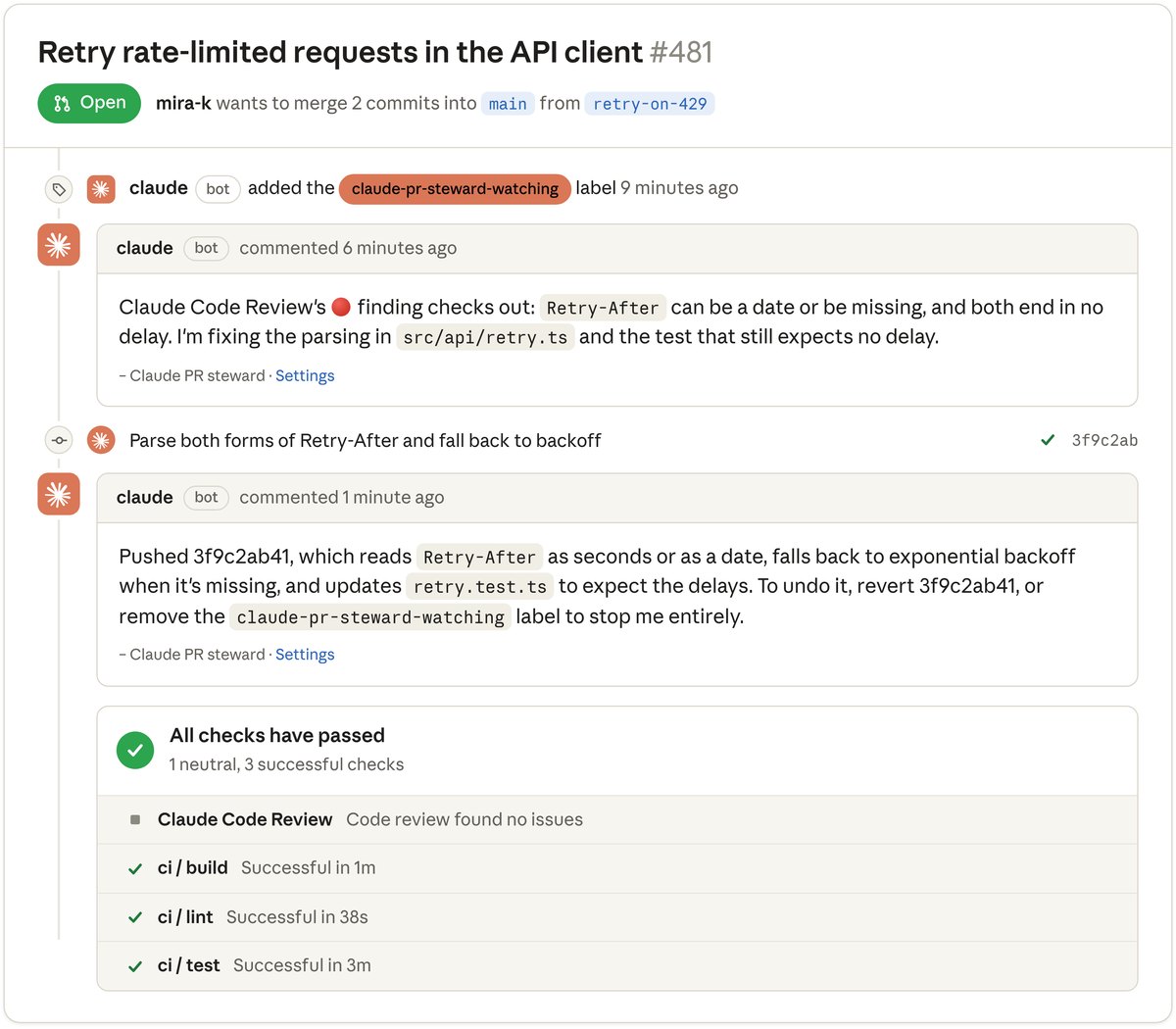
PR Steward steps in on failing CI checks, merge conflicts and review feedback, whether that feedback comes from Code Review, other review bots or teammates. After every push it comments with what it changed and how to undo it. Developers can steer it by commenting @claude with an instruction, or pause it with @claude stop.
The important design limit: PR Steward is designed not to approve or merge pull requests. What merges is still governed by your GitHub branch protection rules. Anthropic's docs recommend starting it in Manual mode (triggered with @claude steward) and note it has no spend limit of its own until you set one.
Claude Approvals: a smarter CODEOWNERS file
Claude Approvals applies an approval policy that lives in your repository at .claude/approvals.yml. Anthropic describes it as working “like a smarter CODEOWNERS file”: a policy can set how many people must approve changes to a path, let Claude post an approving review on routine changes, and demand extra human sign-off for sensitive areas such as billing code. Policies can use Code Review results as a signal, along with your own classifiers written in natural language.
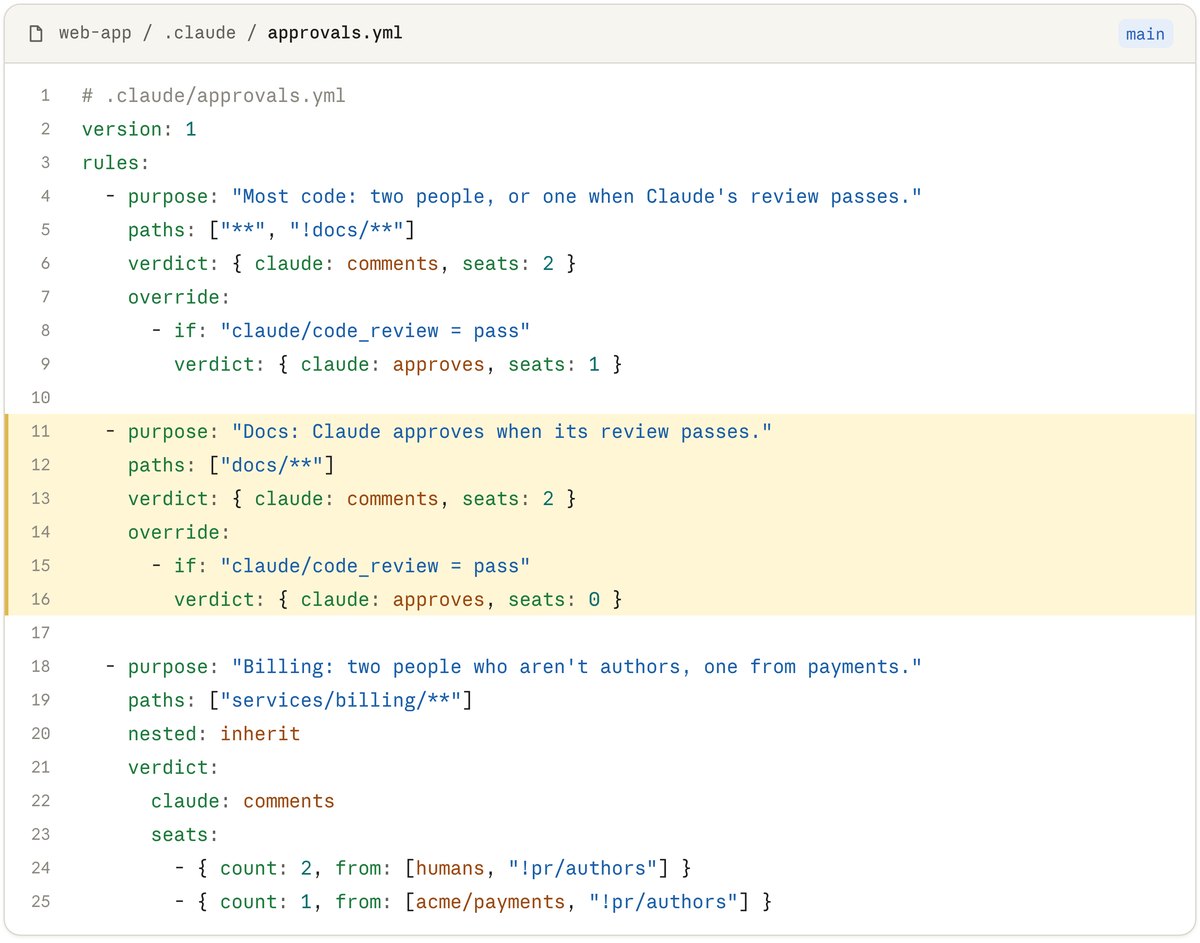
Both of Anthropic's starter policies begin in observe mode, where the check reports what the policy would decide but Claude does not approve and the check normally counts as passing. Anthropic recommends staying there until you trust the results, then making the Claude Approvals check required in GitHub. Enforcing a policy needs at least two people with write access, and making the check required on a private repository needs a paid GitHub plan.
/ship: one command for individual developers
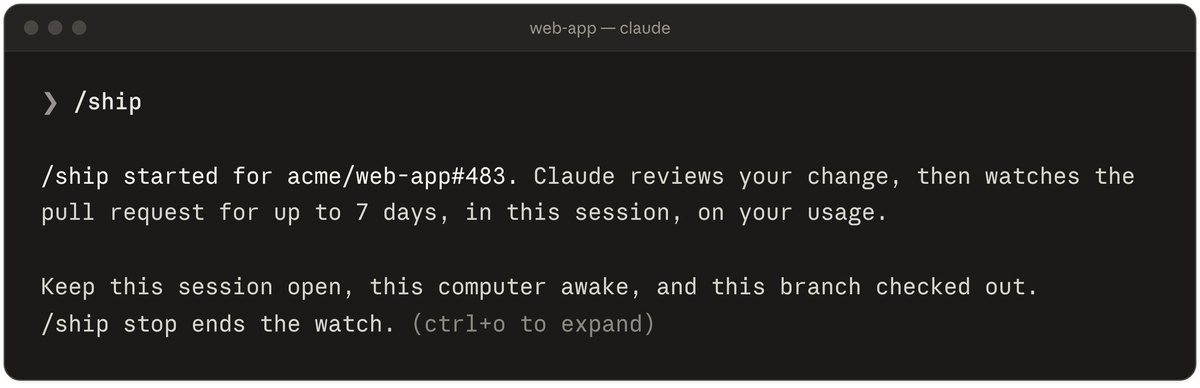
You do not need an admin to try it. In Claude Code, the new /ship command pushes a finished change, opens the pull request, reviews it and then works on feedback and failing checks to get it mergeable. Anthropic's example shows /ship watching a PR for up to seven days within the session. What can actually merge still depends on your permissions and the repository's branch rules, and running /ship counts as regular Claude Code usage. It is rolling out in Claude Code and the desktop app.
Pricing, availability and limits
- Plans: Claude Team and Enterprise, for repositories on GitHub only. Code Review is generally available; PR Steward and Claude Approvals are in beta.
- Billing: usage is billed on tokens, separately from plan usage. Cost depends on the number and size of PRs, the review level, how often reviews run and how much work PR Steward does. Admins can set spend limits for Code Review and PR Steward.
- Approvals costs: no base charge, but classifiers are billed on tokens, and a policy that uses Claude's review triggers a billed Code Review even in observe mode.
- Not available to organisations with Zero Data Retention, the HIPAA configuration or customer-managed encryption keys.
- Launch credits: eligible Claude Enterprise organisations can claim at least $10,000 in Claude Ship credits, to be used within 30 days; the claim deadline is January 15, 2027.
Customer quotes in the launch post come from engineering leaders at Carvana and TELUS, who say PR Steward cut the time teams spend working through review feedback while keeping a human in the loop. The Verge framed the launch as Claude now being able to review pull requests and ship fixes on its own.
The risks to plan for
- Merges without a human. Anthropic's docs warn that if you combine GitHub auto-merge or a merge queue with a policy that does not require a person's approval, a change can merge without anyone acting. Decide deliberately which paths, if any, Claude may approve alone.
- AI misses things. Anthropic states that Claude Ship “may miss bugs, security vulnerabilities, or other issues”. Keep tests, security scanning and human review on high-risk code.
- Runaway spend. PR Steward has no spend limit until you set one, and observe mode is still billed. Set monthly limits before enabling it across busy repositories.
How to roll it out
- Pick one repository and turn on Code Review at the Standard level.
- Add PR Steward in Manual mode, so it only runs when someone types
@claude steward. - Commit a starter
.claude/approvals.ymlin observe mode and compare its verdicts with your human reviewers for a few weeks. - Only then make the Claude Approvals check required, and keep billing, auth and infrastructure paths on human sign-off.
Claude Ship sits on top of Anthropic's latest models; see our breakdown of Claude Fable 5.2 and Mythos 5.2. For a very different take on agentic coding, read about Microsoft's Agensh, where 1,024 agents rebuild software with no boss, and for the latest OpenAI coding models, our GPT-6.2 Astra and Sol breakdown. Want help putting AI review into your delivery pipeline? Talk to BSH Technologies.
Sources
Frequently asked questions
What is Claude Ship?
Claude Ship is Anthropic's set of GitHub pull request agents, launched November 23, 2026: Code Review finds issues, PR Steward fixes failing checks, conflicts and feedback, and Claude Approvals applies an approval policy your team writes.
Can Claude Ship merge code without a human?
PR Steward never approves or merges. Claude Approvals can post an approving review where your policy allows it, so if you also use auto-merge with a policy that needs no person, a change can merge without anyone acting. Branch protection decides what merges.
How much does Claude Ship cost?
It is billed on tokens through your organisation's usage credits, separately from plan usage. Admins can set spend limits for Code Review and PR Steward; Approvals has no base charge but its classifiers and any Code Reviews it triggers are billed, even in observe mode.
Who can use Claude Ship?
Claude Team and Enterprise organisations with repositories on GitHub. It is not available with Zero Data Retention, the HIPAA configuration or customer-managed encryption keys.
What does the /ship command do?
In Claude Code, /ship pushes your change, opens the pull request, reviews it and works through feedback and failing checks to get it ready to merge. It counts as regular Claude Code usage.
From the blog
View all posts
OpenAI GPT-6.2 Astra and Sol: Benchmarks, Pricing, Safety Findings and Early Reviews
On November 17, 2026, OpenAI released GPT-6.2 Astra, its new frontier model for hard professional and scientific work, and GPT-6.2 Sol, its everyday model. Astra got 20% cheaper; Sol kept its price and closed most of the gap. Here are the benchmarks, the prices, what the system card flags and why early reviews were mixed.


Claude and the Riemann Hypothesis: How Anthropic's Levent Alpöge Proved It, and How Lean Verified 17 Million Lines
On November 20, 2026, Anthropic mathematician Levent Alpöge said he and Claude had proved the Riemann Hypothesis, publishing the proof only as a 17-million-line Lean library. A day later the Lean and Mathlib communities certified it correct. Here is what the problem is, how Claude helped, how the proof was checked and what happens next.