OpenAI Says GPT-6 Can Design Proteins On Its Own: The Lab Results
On November 24, 2026, OpenAI published evidence that its GPT-6 models can design protein structures and amino-acid sequences using only reasoning and code, without specialised biology models. Partner lab Onava tested the designs: 35 of 322 mini proteins bound their targets, 70% of redesigned antibody loops kept binding, and docking beat specialist tools. Here is every number, and where the models still fall short.
What OpenAI published
On November 24, 2026, OpenAI published GPT-6 models demonstrate intrinsic protein-design capabilities, alongside a preprint, GPT-6 as a Universal Foundation Model for Protein Biology. The claim is narrow but significant: its general models can design new protein shapes and the amino-acid sequences that fold into them using only reasoning and general-purpose coding tools, rather than calling specialised protein models such as RFdiffusion or ProteinMPNN. This page is the long-form briefing behind the BSH Technologies Instagram carousel, with every claim linked to a primary source.
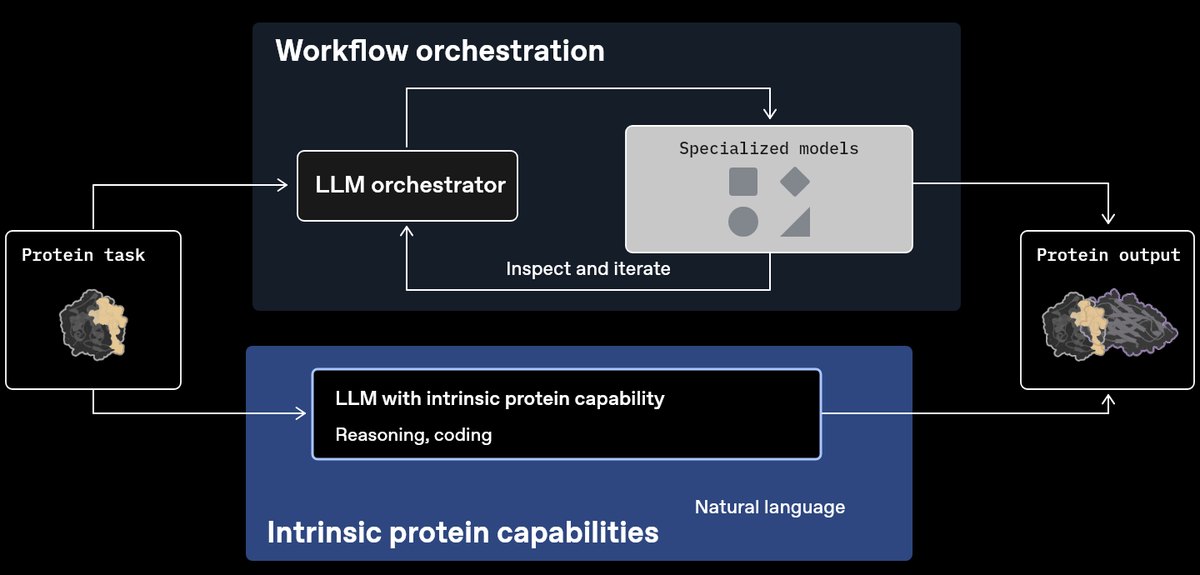
Why it matters: today's protein design stacks chain together several narrow models, each with its own inputs and constraints, and adding a new requirement often means retraining or rewriting software. A general model takes the requirement in plain language instead. OpenAI's stated goal is to let scientists "describe what they want a molecule to do" and get candidates back.
How the designs were tested
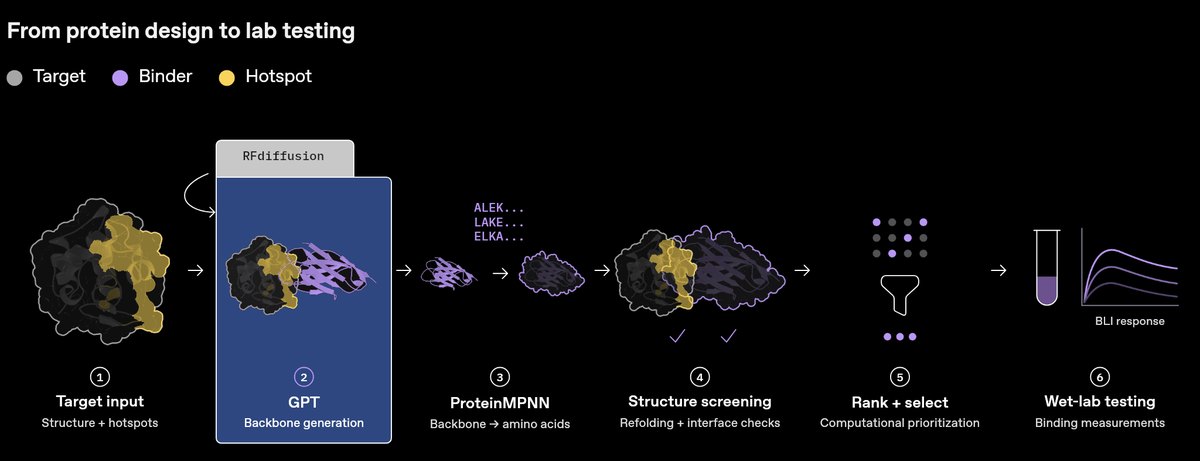
The lab work was done with research partner Onava. GPT-6.2 produced three-dimensional designs; specialised models then supplied candidate sequences and helped filter which ones to build, and Onava made and measured the proteins.
Lab test 1: mini proteins that bind
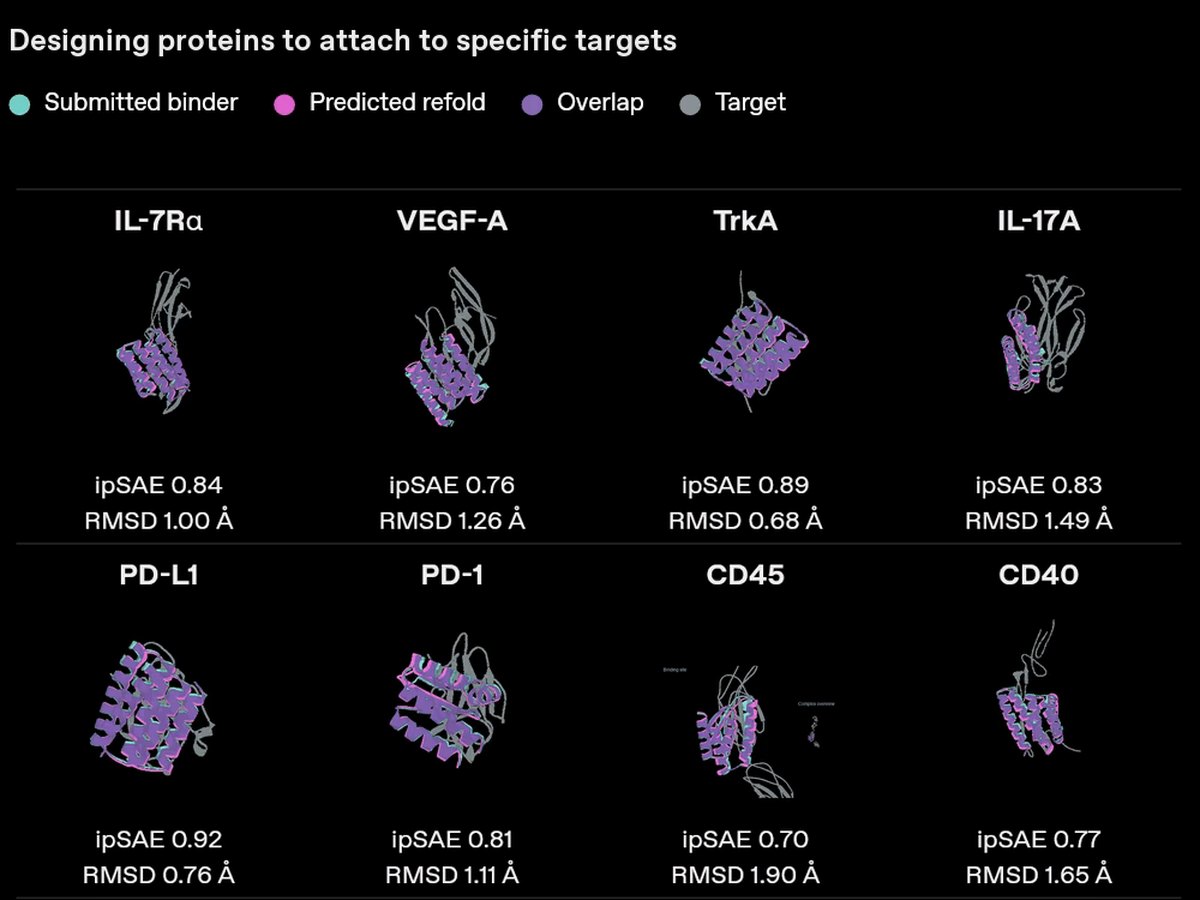
OpenAI gave GPT-6.2 the structures of five target proteins and marked where a minibinder should attach. The model wrote code to generate three-dimensional designs, with no specialised protein model involved in that step.
Onava made and tested 322 minibinders against 5 targets. 35 (10.9%) bound their intended target: 18 hits for IL-17A, 8 for VEGF-A, 5 for PD-L1 (a protein some cancers use to hide from the immune system), 3 for IL-7Rα and 1 for TrkA. OpenAI is candid that the original RFdiffusion study reported higher hit rates, and that hit rates depend heavily on how strictly designs are filtered first.
Lab test 2: writing fresh sequences
The second experiment hid the sequence and kept the shape. Given three-dimensional models of known binders, GPT-6.2 proposed new amino-acid sequences. In the initial screens, 75 of 88 designs bound for MDM2 (85%), 26 of 42 for VEGF-A (62%) and 8 of 59 for PD-1 (14%), with the new sequences differing from the originals by a median of 50%, 43% and 15% respectively.
On three unpublished binder shapes the model had generated earlier, 14 of 107 proteins (13.1%) built from its new sequences bound — evidence, OpenAI argues, that this is not memorisation. For one PD-L1 shape, the model produced two sequences that differed from the original at 52 and 58 of 90 positions and from each other at 44.
Antibodies: redesigning the grip
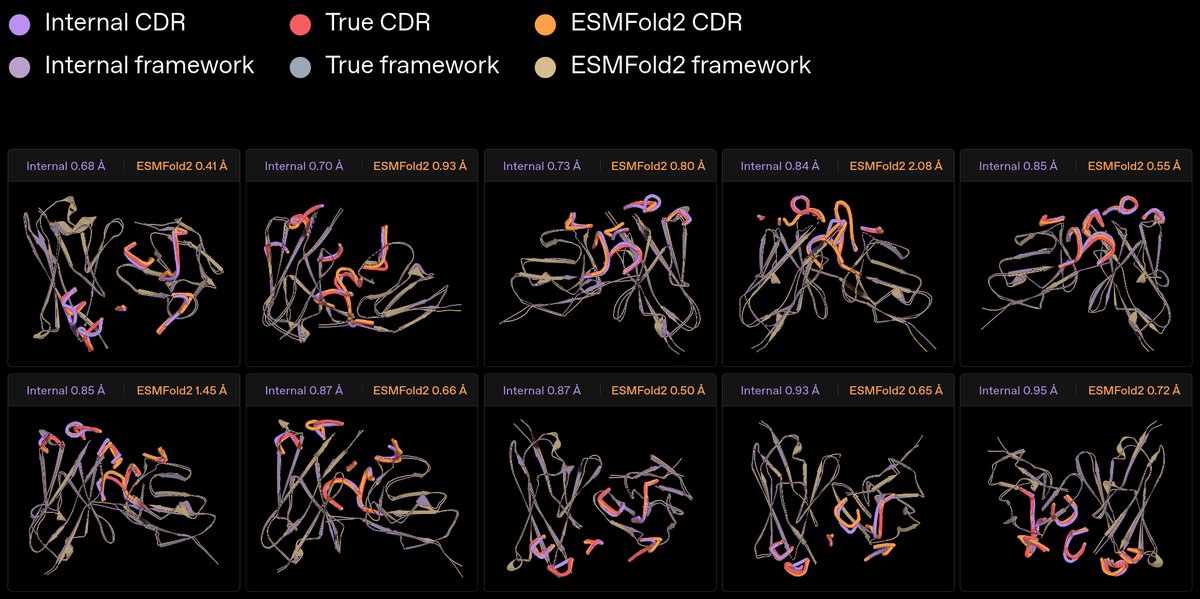
Antibodies grab their targets with a handful of loops. OpenAI removed those loops and asked the model to write new ones. Of 182 nanobody (VHH) designs against IL-4Rα, 128 (70%) still bound. In a tighter test on five real therapeutic antibodies, the model was told to change about half the amino acids in each of three loops: 179 of 272 fragments (66%) still bound PD-1 or PD-L1.
Docking: where a drug molecule lands
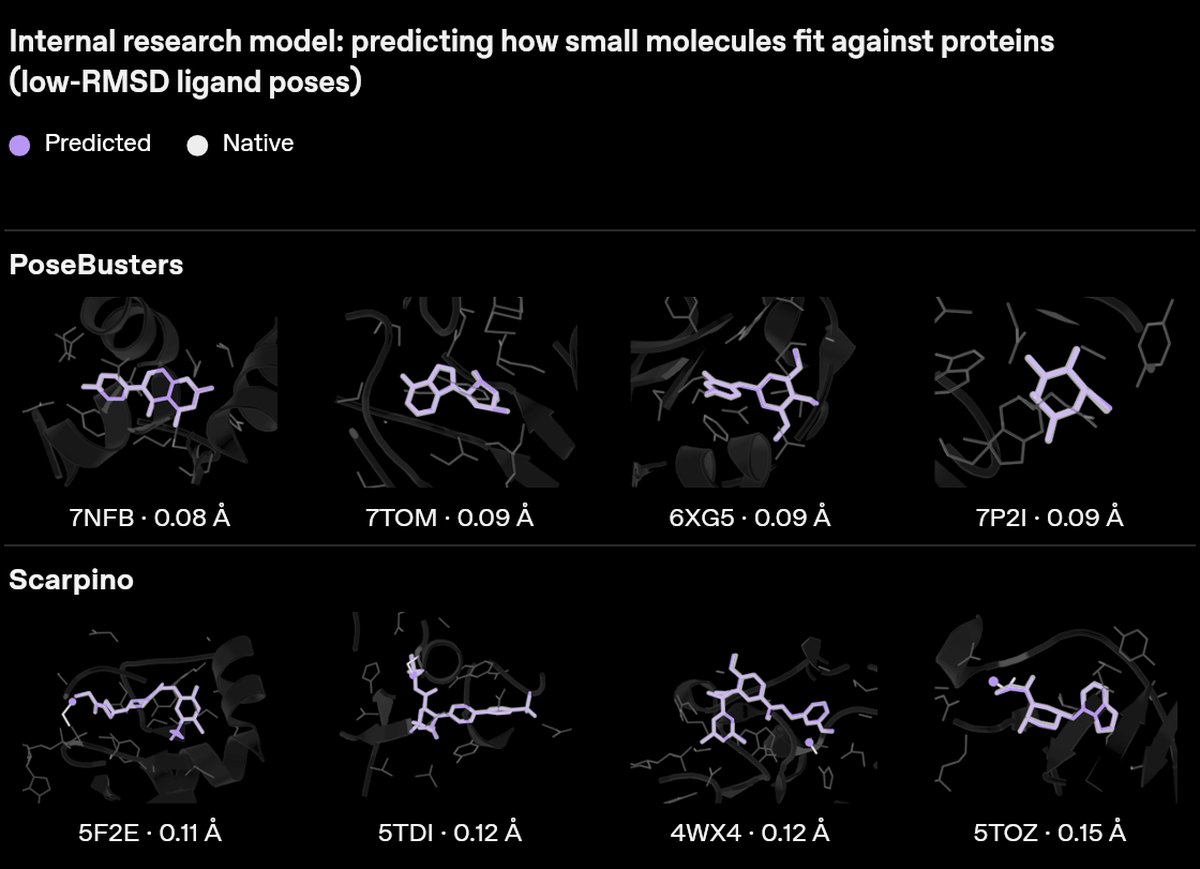
Predicting how a small molecule sits in a protein pocket is called docking, and it is the step that tells chemists whether a change to a drug candidate will help. On the PoseBusters set, GPT-6.2 matched the experimentally observed pose in 93% of scored predictions and an internal research model in 96%, against 50% for the specialist model DiffDock-L. On 179 covalently bonded structures from the Scarpino set, where the model was told which two atoms form the bond, GPT-6.2 reached 92% and the internal model 97%, against 60% for DiffDock.
The same pattern shows up in antibody docking, where the mean DockQ score climbed across model generations: roughly 0.05 for GPT-5.6, 0.28 for GPT-6, 0.57 for GPT-6.2 and 0.81 for the internal model. Mutation-effect ranking improved too, from 0.41 to 0.66 rank correlation on a protein-stability dataset.
Building around a fixed shape
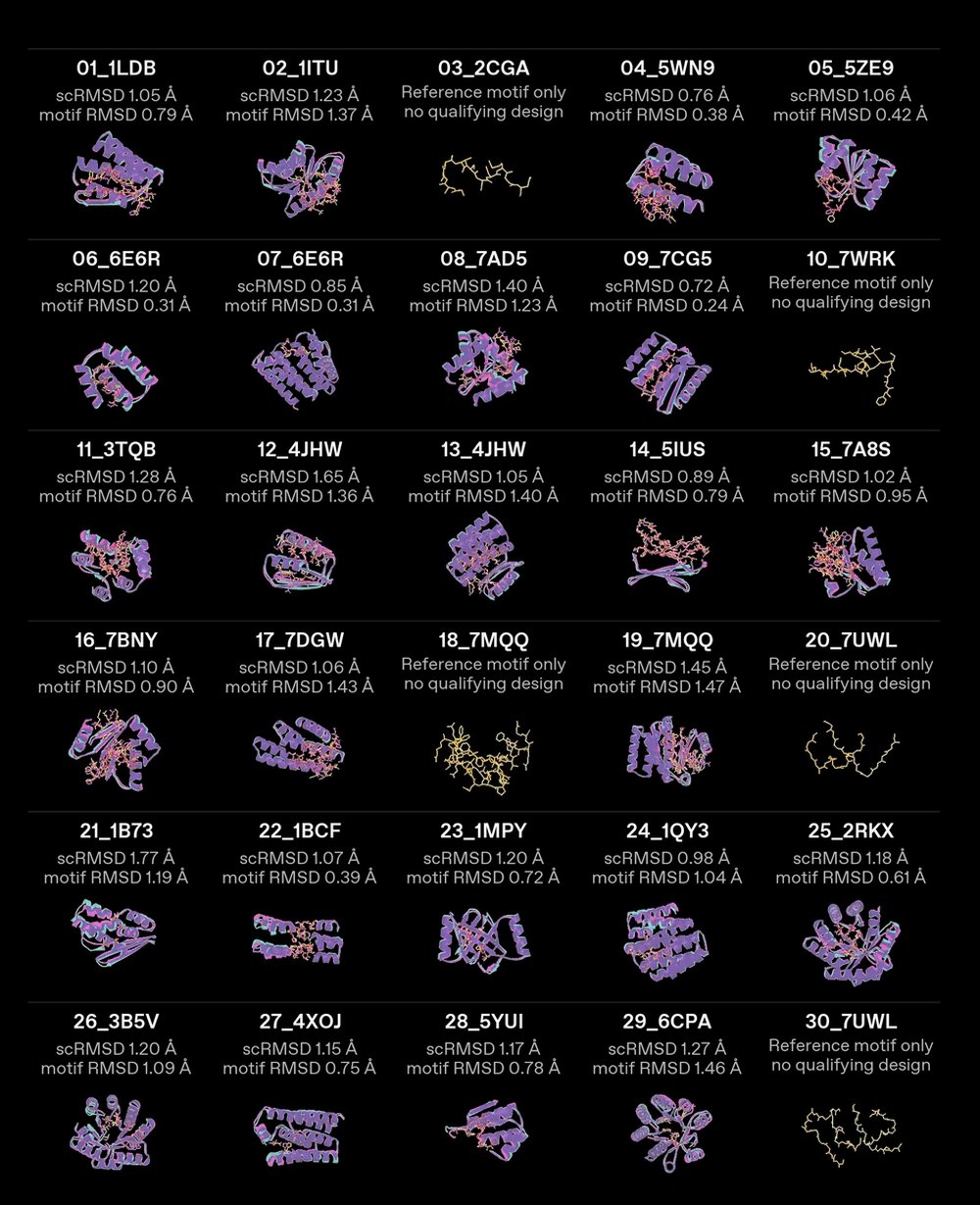
In MotifBench-style motif scaffolding, the model is handed a rigid arrangement of key amino acids — an enzyme's active site, say — and must build the rest of the protein so the fold holds it in place. OpenAI reports 43.7% success for its latest internal model against 27.8% for RFdiffusion. Asked instead for an overall fold, specified with a chain length and a CATH classification code, it passed 18.9% of 200 challenges against 17.1% for the specialist model Proteina.
Where it still falls short
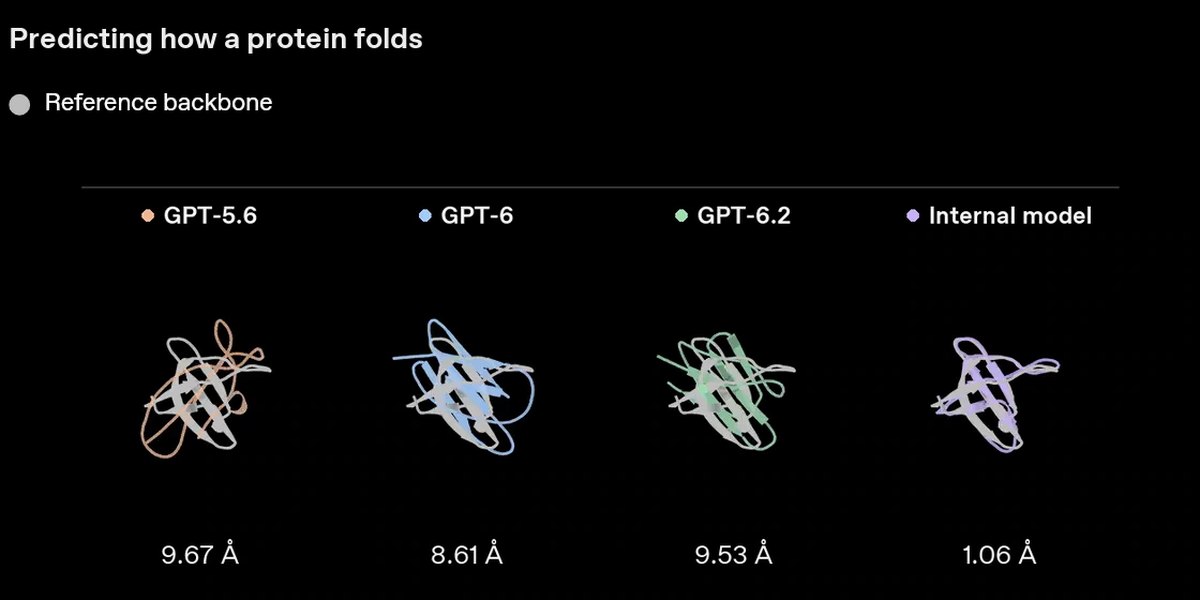
This is a jagged frontier, and OpenAI says so plainly. Predicting a complete structure from sequence alone remains the weak spot: average TM-score rose from 0.16 for GPT-5.6 to 0.26 for GPT-6.2 and 0.38 for the internal model, while ESMFold's successor ESMFold2 averaged 0.93.
- Specialist models were still in the loop. Boltz-2, OpenDDE and ESMFold2 filtered candidates, so this is not end-to-end zero-shot design.
- Some benchmarks may flatter the models. Where sequences are inferred from public structures, high scores may partly reflect memorisation.
- Binding is not a medicine. Specificity, stability, biological effect, safety and efficacy all come after.
- Biosecurity. The same capability can be misused; OpenAI points to its Preparedness Framework for how it assesses and mitigates that risk.
What it means for teams building with AI
The practical lesson generalises beyond biology: a frontier model with good reasoning and a code interpreter is now competitive with purpose-built tools on several steps of a specialist pipeline, and it takes its instructions in plain language. The winning pattern is a hybrid — a general model proposing, specialist models filtering, and a measurement step that settles the argument. We saw the same shape in Claude's scorpion-venom binder work and in the Lean-verified Riemann Hypothesis proof, where machine checking did the verifying. For the models behind this work, see our GPT-6.2 Astra and Sol breakdown. Thinking about where AI fits in your own R&D or product pipeline? Talk to BSH Technologies.
Sources
- OpenAI: GPT-6 models demonstrate intrinsic protein-design capabilities (Nov 24, 2026)
- Preprint: GPT-6 as a Universal Foundation Model for Protein Biology (PDF)
- Onava, OpenAI's wet-lab research partner
- Nature: De novo design of protein structure and function with RFdiffusion
- MotifBench: a benchmark for motif-scaffolding problems
- CATH protein structure classification
- ESMFold model card
- OpenAI Preparedness Framework
Frequently asked questions
What did OpenAI announce on November 24, 2026?
That its GPT-6 family can design protein structures and amino-acid sequences using only reasoning and general-purpose code, without calling specialised protein models, backed by a preprint and wet-lab tests run with partner Onava.
How well did the designed proteins work in the lab?
Of 322 mini proteins designed by GPT-6.2 and made by Onava, 35 (10.9%) bound their intended target, with at least one hit on each of the five targets. In sequence-redesign tests, 85% of MDM2 designs and 70% of redesigned nanobody loops still bound.
Is GPT-6 better than specialised protein models?
On some steps, yes. It beat RFdiffusion on motif scaffolding (43.7% against 27.8%) and DiffDock-L on docking (93% against 50%). On predicting a complete structure from sequence it is far behind: 0.38 TM-score against 0.93 for ESMFold2.
Did specialised models still play a part?
Yes. ProteinMPNN and SolubleMPNN supplied sequences, and Boltz-2, OpenDDE and ESMFold2 filtered candidates before lab testing, so this is not end-to-end zero-shot protein design.
What are the risks?
Designing proteins can be misused, which OpenAI handles under its Preparedness Framework. Scientifically, binding in a screen is only the first step; specificity, stability, biological effect and safety still have to be proven.
From the blog
View all posts
Claude Ship: Anthropic's AI Agents That Review, Fix and Approve Your Pull Requests
On November 23, 2026, Anthropic launched Claude Ship, a set of GitHub agents that take a pull request through code review, fixes and an approval decision. Code Review is generally available; PR Steward and Claude Approvals are in beta, and a new /ship command brings it to Claude Code. Here is how each agent works, what it costs and the risks to plan for.

OpenAI GPT-6.2 Astra and Sol: Benchmarks, Pricing, Safety Findings and Early Reviews
On November 17, 2026, OpenAI released GPT-6.2 Astra, its new frontier model for hard professional and scientific work, and GPT-6.2 Sol, its everyday model. Astra got 20% cheaper; Sol kept its price and closed most of the gap. Here are the benchmarks, the prices, what the system card flags and why early reviews were mixed.